
Appalachia in the ‘Hunger Games:’ The Real Life Roots of District 12
 I like to think of myself as a Hunger Games fan and a real admirer of Suzanne Collins’s work in general. You can read what I have written about her Panem Trilogy here. You’ll note in that collection of urls that there are a bunch from Elizabeth Baird Hardy, our resident expert on these books and the film adaptations made of them.
Unlike Elizabeth’s other brilliant work at Hogwarts Professor, say, on the Faerie Queene epigraphs in Troubled Blood or about C. S. Lewis (e.g., here and here) when she writes about the Hunger Games she is drawing on more than her years of close reading and skills as a published scholar. District 12 is where she lives.
And she’s written a book about it that you can pre-order today and read next month: Appalachia in the Hunger Games: The Real Life Roots of District 12.
In it, Elizabeth brings together her roles as a literary maven and as a champion of Appalachian heritage. The descendant of some of the earliest settlers in Appalachia, she is a storyteller, historic interpreter, and teacher who has shared her passion for and knowledge of Appalachia and its people for over 30 years. As a writer, she has explored the literary treasures in texts ranging from the Chronicles of Narnia to Harry Potter and has been Deputy Head Mistress here at Hogwarts Professor for over fifteen years. She relies on both those roles to delve deeply into the Hunger Games books and to reveal how these fictional stories feature much that is true.
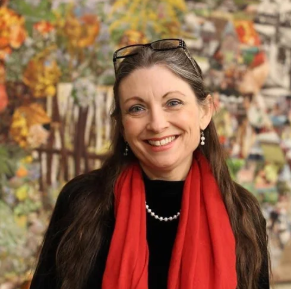 In 2011, when there were only two Hunger Games books and no films, Elizabeth started teaching the first book in her freshman composition classes in the western mountains of North Carolina. Her students responded so positively that she kept using the book for years. One reason the book worked so well was that her mountain college students understood the culture of District 12 because it was familiar. Suzanne Collins has created a world woven with elements of Appalachian culture and characters whose decisions and voices are often distinctly Appalachian.
This volume has been over a decade in the making. Elizabeth contributed a chapter on Appalachian Culture in the Hunger Games to the 2016 Critical Insights: The Hunger Games Trilogy. She quickly realized that there was enough material for an entire book. Although events like COVID and personal challenges presented obstacles along the way, those delays allowed her to draw upon the two prequels. Sunrise on the Reaping, in particular, has a wealth of connections to Appalachian culture and history. Thanks to an understanding publisher, this book will now be arriving just before the film of Sunrise on the Reaping.
 Twelve chapters look at various aspects of Appalachia that directly connect to the novels: Geography and geology; Plant Life; Birds and Animals; Foodways; Stereotyping and Perception by the Larger Culture; Violence and Alcoholism: Self-Sufficiency, Isolation, and Xenophobia; Family and Independence; Faith and Fatalism; Humor and Storytelling; Music; Time: Circles and Cycles. Each chapter draws together Suzanne Collins’s fiction and the actual Appalachia and its people, history and culture. Readers who are unfamiliar with the real Appalachia are sure to learn more about the place they have visited in print, and even those who know Appalachia well will discover more about both the real mountains and the literary ones of District 12.
The book is currently available for pre-order on Amazon and from McFarland. More information on Elizabeth, her work, and opportunities to hear her speak can be found at AppalachianInkling.com.
Congratulations!!!
I’ve had the pleasure of reading some of this book in drafts and highly recommend it! Kudos, Elizabeth!