Netflix Narnia in the Works, Yet Another Attempt to Adapt
Book adaptations are popular commodities in the streaming world, and some are better and more faithful than others. Disney+ just recently released the first season of Percy Jackson and the Olympians, a satisfying and well-done series with a great cast that is true enough to the text to satisfy readers while also paced and edited appropriately to keep up screen momentum. Amazon Prime’s Wheel of Time, by contrast, is a sleek and sexy series that Robert Jordan, may he rest in peace, would not recognize as having much in common with his behemoth book series. It is no surprise, then, that Netflix already has its hooks in The Chronicles of Narnia. Although the streaming giant has had the rights to the series for years, it look like it is actually now planning to put a Narnia adaptation into production, and there are those who are excited for the series as well as those who are less than enthusiastic about what this adaptation may entail. After the jump, let’s look at some of the previous attempts at Narnia adaptations and ponder some of the news that we have so far about the Netflix project.
Previous visits to Narnia
I must admit that my first exposure to C.S. Lewis’s brilliant Narniad actually came through a film adaptation. In 1979, The Lion, The Witch, and the Wardrobe premiered on network television as an animated 2-part movie. At the time, I was in the hospital having my tonsils removed, so my folks kindly paid the rental fee to have a small black-and-white television set placed at my bedside (indeed, young folks, in the 70s, we did not have color televisions in every room in the hospital, shocking, I know). It didn’t matter that the screen was small and grayscale; I was drawn into the story, and when I started reading the books the next year, the spell was complete. That particular adaptation is quite faithful to the novels despite perhaps not holding up over the decades when viewed by modern audiences.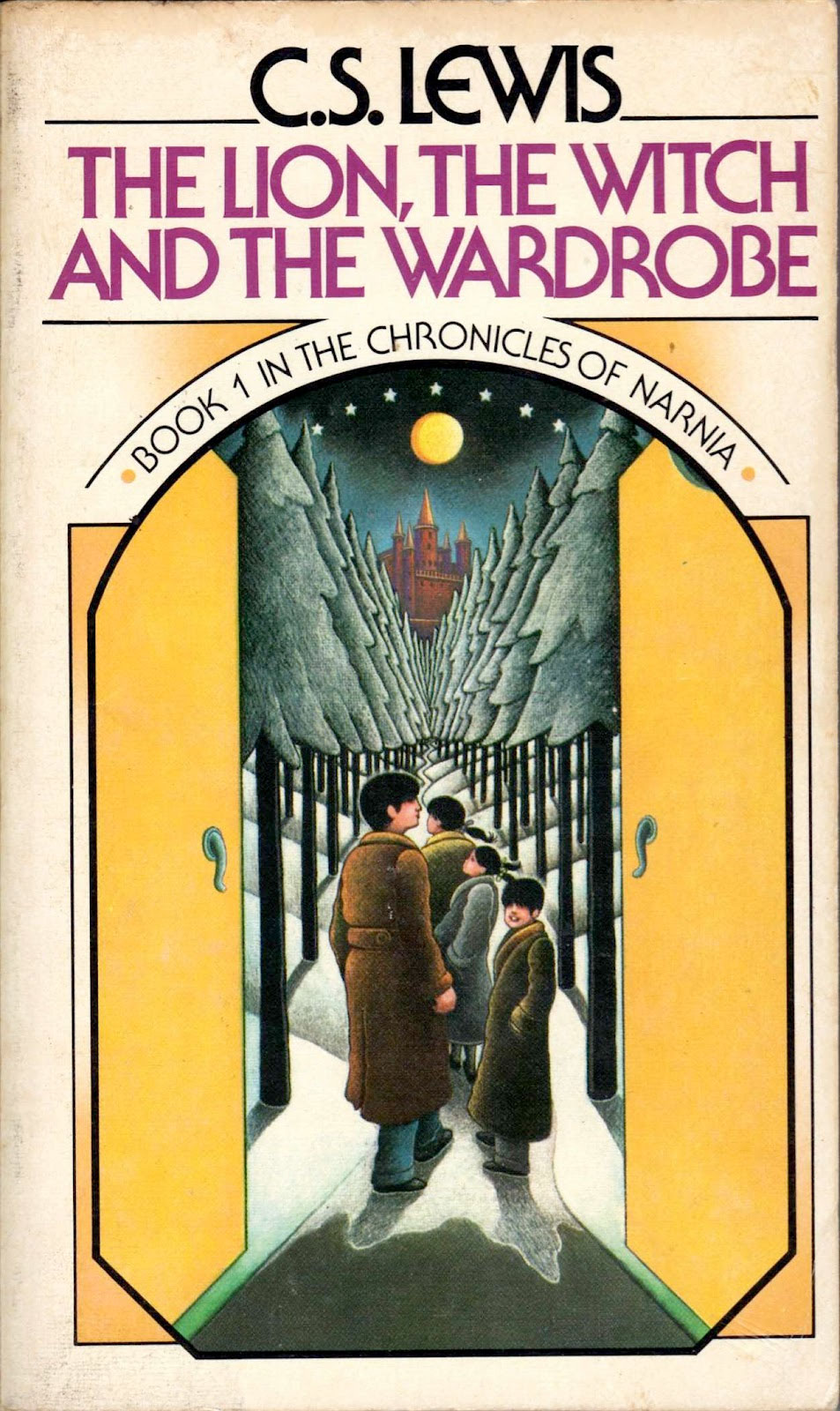
In the late 1980s, Wonderworks, aired on PBS, showed the British adaptations of the Chronicles as a live-action mini-series. The Lion, the Witch and the Wardrobe, Prince Caspian, The Voyage of the Dawn Treader, and The Silver Chair were each aired as a multi-part series. The Horse and His Boy, The Magician’s Nephew, and The Last Battle were not part of the series. One reason was doubtless the cast, as numerous actors played one or multiple roles across the installments. While the visual effects were not particularly wonderful, and some of the acting was over-the-top and campy (Barbara Kellerman, who played both the White and Green Witches, is particularly over-dramatic for the screen, with a performance that seems better suited to the stage), the adaptation was sweet, with some lovely casting (children who look like children!), and the “deeper magic” of the stories was not watered down. The animals, portrayed by actors in bulky costumes or puppets, are not very believable, but all four installments of the series are charming in a sort of nostalgic way, similar to other shows of the period, like Shelley Duvall’s Fairy Tale Theater.

Although there are some other great media adaptations of the Chronicles, like Focus on the Family’s super Radio Theater version, the big screen finally went to Narnia in 2005 with the Andrew Adamson-directed Walden Media version of The Lion, The Witch, and the Wardrobe. Despite a few odd adaptation choices, the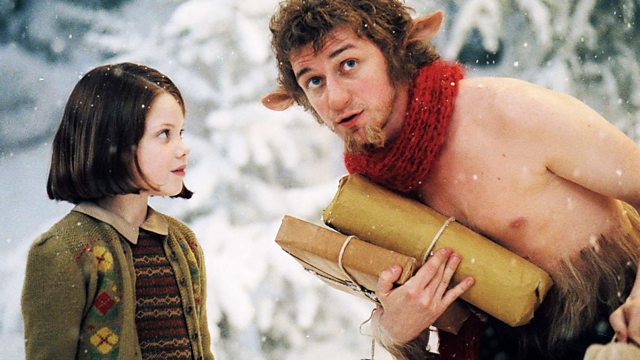 film is, for the most part, fantastic. James McAvoy’s Tumnus remains one of my personal favorite performances of any actor in any film. He gives an absolutely brilliant, nuanced performance that walks the tightrope of ally and kidnapper beautifully. The children are wonderful, including Skandar Keynes, who no longer acts professionally, as Edmund, and the delightful Georgie Henley as Lucy. Tilda Swinton is gloriously chilly as The White Witch. The film’s tone is fantastic, with wonderful music and nice visuals, most of which still hold up well, nearly twenty years later. Unfortunately, with the subsequent adaptations of Prince Caspian and The Voyage of the Dawn Treader, the films steered further and further away from the books. They are still fun films, but they often lose much of the texts’ power and meaning. The last few minutes of Dawn Treader, though, are completely true to the text, making me willing to forgive some of the nonsense leading up to that point. Although The Silver Chair was planned, it was never produced, largely due to diminishing returns with the previous films and fan complaints. All three films are available on Disney+.
Netflix Wades into the Wardrobe
Once the Walden Media/Disney folks gave up on their adaptations, there were other possible takers, but Netflix, after gaining the rights to all seven of the Narnia books, has just been sitting quietly on them until recently. Now, however, it seems the adaptations may actually materialize. According to the What’s on Netflix website, there are a few things we know so far about the Netlfix deal, some of which may be cause for concern among serious readers
- A Universe of Narnia– The deal includes both film and series possibilities as the Netflix folks may be considering a whole universe, like the Marvel and Star Wars universes, owned by Disney. Those two both feature films like The Avengers or Rogue One as well as limited-run series like Loki or The Mandalorian. While those universes are being steered by teams that include input from the original creators and those tapped by those creators with the responsibility to care for those creations, any “new” Narnia content is going to be created without Lewis’s direct input, and even his stepson, Douglas Gresham, who has supervised many uses of Lewis’s work, does not seem to have much of a role over at Netflix. The MCU and Star Wars universes are, for the most part, well-run IPs. While some of the films and series are less well-executed than others (Solo, Thor: Love and Thunder, Secret Invasion), some of the content created to go directly on the streaming service is excellent, with big stars like Ewan McGregor reprising their big screen roles on the small screen. Other shows, like Ms. Marvel, set the stage for big-screen offerings.
However, the Narnia universe is different from the galaxy far, far away or any one of the universes within the vast Marvel multiverse. Because of its beautiful structure, with both the creation and the destruction of the world included within the arc of the story, it is not open-ended. Star Wars and MCU shows and movies sometimes jump far into the past or the future, because those universes have plenty of room on either end of their timelines. Narnia is less flexible, so any stories not drawn from the original novels will have to fit into that framework. Granted, there are plenty of stories that can fit into the framework, like those King Tirian mentions to Jill and Eustace. We could travel to the Lone Islands or Archenland, perhaps, to fill in areas that Lewis only mentions in passing within the narrative of the larger Narniad. However, the entertainment industry is known for seeing any possible way to make revenue, and that means that there may be expansions to the universe that would not align with Lewis’s vision or tone. Without a Dave Filoni or Jon Favreau on board to protect and guide the development process, I find myself wary of the plans being made to extend the Narnian universe into a self-sustaining cash machine for the Netflix overlords.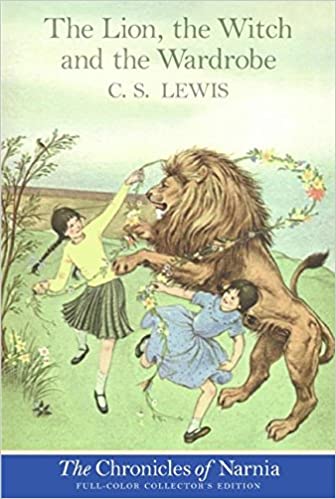
- Putting the Silver Chair first?— I frequently have to “correct” reading order for the Chronicles thanks the misguided publisher decision to arbitrarily re-order the books from their original structure, a wonderful structure that mirrors that of Paradise Lost. I contend that repeat readers can certainly read the novels in Narnian history order, starting with The Magician’s Nephew. First-time readers, though, should always begin with The Lion, the Witch, and the Wardrobe so that they enter the Wardrobe, and Narnia, with Lucy. But the Netflix folks are indicating that they might start their new films with The Silver Chair. That is an interesting choice for a couple of reasons. For one, this is the installment Walden/Disney would have produced next, so it’s a bit like picking up where those movies of early 2000s left off. It’s also an interesting choice because the harrowing journey of Jill, Eustace, and Puddleglum is pretty grim, with everything from uncomfortable weather to the threat of being eaten to being dragged through a vast underground cavern. Perhaps such unpleasantness ties in well with modern tastes. After all, people do watch Game of Thrones and The Last of Us, of their own free will. I also suspect that one
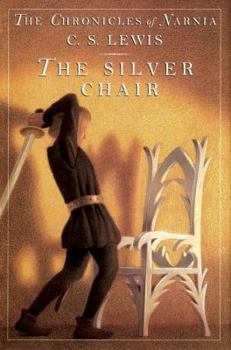 reason to start with this installment is because it is the one that introduces Jill Pole, and the novel is primarily told from her perspective. Jill, as a strong female character and an “outsider” who initially thinks Eustace is pulling her leg, can be a voice that brings in both those familiar with the Chronicles and those who have only seen the Walden films.
 - Director=Greta Gerwig–A Jill-driven opening salvo may also be tied to the director. Greta Gerwig, known for last year’s Barbie and the most recent version of Little Women, looks to be set to direct, possibly starting with The Silver Chair. There is the possibility that this will be Gerwig’s first contribution but not the first one released. While the Netflix story is that Gerwig grew up with a Christian background and is thus a perfect choice to handle Lewis’s beautiful Chronicles, that may not mean she will respect the series as Lewis intended it. Considering the runaway success of series like The Chosen, the Netflix folks may actually take seriously the concerns of Christian viewers and avoid alienating what could be a loyal and lucrative audience. Interestingly, media darling Gerwig has said in interviews that she is terrified of adapting the novels to film, and many readers share that fear, concerned that the films will suffer from the 21st-century-istic tone of Barbie or the contextual disregard of Little Women ( while it’s beloved by some viewers, it’s legendary among historical
interpretation circles for its sloppy anachronistic costume and hair choices). Since she is, so far, only tasked with two of the films, it remains to be seen if other directors are in line for the other installments. In any case, her previous films include a number of complex female characters, so perhaps beginning with Jill will be right up her alley.
As with anything, we shall have to wait and see what transpires, but, in the meantime, I will continue to take comfort in the actual Chronicles and in Lewis’s other fiction because Till We Have Faces and The Space Trilogy are both so odd that they have managed to frighten off adaptations, thank goodness.
I have no expectations of anything good coming from Hollywood especially not with all the DEI quotas & what not in place. Nor do I expect them to be able to properly tell a Christian story. Or to tell a story at all really.
I’ll stick with the 1979 animated movie. I’d already read the LWW before seeing the movie but the movie just added to the magic & wonder of the story. Just sitting here thinking about it, I can still draw up pictures from it & hear the voices.
I would love to see a well-written and true-to-source Narnia movie franchise. C.S. Lewis is a phenomenal theologian and author, and his Narnia series, in my opinion, is easily one of the best works of modern Christian fiction (not 1st place, but top 5 for sure).
I hope Netflix can respect the blatantly Christian nature of this IP. I genuinely would love to see them do this series, and do it well! I hope that my child gets to enjoy a wonderful modern adaptation of the world of Narnia just like I did with the Disney films when I was a kid. I’m even willing to forgive some historical anachronisms and divergences from the books as long as they aren’t terribly excessive. However, I think what they will deliver is a soulless shell of a beloved series that pays no attention to, and even outright rejects the beliefs of the author and the source material that he created. I think it will be full of nods to the LGBTQ community and will probably replace the deep Christian allegories that underpin the entire structure of the narrative with some kind of new-agey psuedo-spiritual drivel that has as much in common with genuine Christianity as a toaster has with a duck.
If they want to tell original stories that cater to non-Christian worldviews, that’s fine. I just hope they can let this story be what it was always written to be – a tool to help kids learn about Jesus. Only time will tell.
Aslan is male. Aslan is crucial to the stories. Please reconsider if you’re really casting a female voice. Don’t change the Narnia books please.