What is a Squib, Really? And Where Would Rowling Have Met the Word?

There are few English words-about-words as fun as the Greek derived ‘onomatopoeic,’ ‘name-making’ literally, ‘word that sounds like its meaning’ in common use. ‘Buzz’ and ‘Hiss’ come immediately to mind. ‘chuckle,’ ‘grunt,’ and ‘snore’ are personal favorites (see this site for a list of 150 others). It’s a shame that onomatopoeic does not sound like its meaning but, in being something of a tongue twister and spelling-bee challenge-round item, at least it has an exotic feel appropriate to its subject. According to traditional lore, the names given to things in the Garden of Eden by Adam, primordial Man as Image of God, all reflected the beings named in their sound.

I confess that I assumed the word for barely magical witches and wizards born into magical families in J. K. Rowling’s Wizarding World, the folk she calls ‘Squibs,’ were given that name because of its onomatopoeic source in fireworks; per the Harry Potter Lexicon invaluable online resource, a squib is English idiom for “a dud firework that will not ignite properly.” It sounds like its meaning (as does “dud”) and a reader can feel in it the disappointment of magical parents when their child turns out not to have the gift that will make them full members of their community.

I learned this morning, however, that a squib is not a dud firework, or wasn’t originally though it may have that meaning today, and that it is mentioned more than once in one of Rowling’s known literary influences.

I subscribe to Dimitra Fimi’s ‘A Kind of Elvish Craft’ Substack site because I am a big fan of her work. She is a first tier scholar, as in ‘Professor of Fantasy and Children’s Literature at the University of Glasgow,’ generous to a fault in answering questions from all quarters, and she is blessed with a delightful sense of humor. Professor Fimi is best known as a leading figure in Tolkien Studies and all things fantasy and mythology but she is also a Serious Striker and Rowling fan. Check out Reading Rowling as Myth Maker and Myth Re-Writer: A Conversation with Dr Dimitra Fimi and ‘Sleep Tight, Evangeline,’ Miniature Psalters, and the Head of Persephone: A Conversation with Dimitra Fimi to discover what a treasure-chest she is for all who want to understand Rowling’s artistry and meaning better.

She has recently embarked on a series of posts about The Lord of the Rings that she calls ‘The Slow LotR Re-Read.’ As she explained in the first post of the series on ‘Tolkien Reading Day:’

This year, I am engaged in a slow (really slow!) re-read of The Lord of the Rings, taking copious notes and ruminating on tiny details. I have, naturally, read The Lord of the Rings numerous times (I used to keep a tally, but I’ve now lost count!). First, for pleasure, then as part of my PhD research, later for teaching at undergraduate and postgraduate level, and to suppport supervision of PhD projects, and again and again as I have worked on various publications (from writing my first Tolkien book, to composing numerous articles and essays over the years, and to offering comments/suggestions to strengthen other scholars’ work during various editorial projects).

So, what makes this read different? Two things. First, it is regular, almost daily. But, secondly, and most importantly, it is very slow. I am reading no more than a page each time, sometimes lingering on one or two paragraphs only. This is, of course, both a luxury and a challenge. The natural instinct of most readers is to read on, to find out what will happen next, to follow the adventures of the protagonist(s) as they unfold over many pages and chapters. Slowing down is difficult. Taking the time to savour every word, sentence, and paragraph, before even getting to the level of pages or chapters, is counter-intuitive. We do it naturally as readers, of course, when we hit a particularly striking sentence, or a memorable turn of phrase, or a “quotable” couple of lines. Then we stop and ponder.

What I am trying to experiment with, though, is doing this stopping and thinking for every word, sentence, and paragraph in The Lord of the Rings. Each time I am pondering Tolkien’s choice of lexis, diction and syntax. I am also ruminating on his craft: his use of dialogue vs. narration, his construction of the narrator’s voice, his gradual fashioning of setting, his deliberate choice of imagery, his devising of characterization, his handling of story vs. plot. And, at the same time, I am stopping to consider details that I have missed before. I am still discovering new things in a text I’ve read so many times, by paying attention to elements of description, or spoken utterances, or tone of voice.
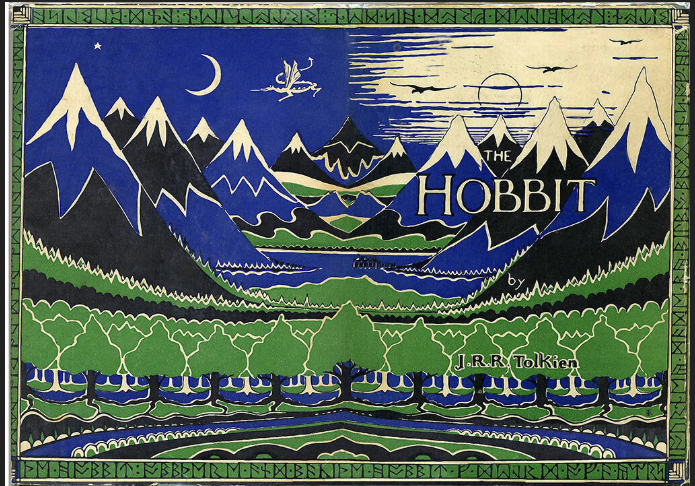
As I begin my slow-re-read of Harry Potter and the Philosopher’s Stone for a book whose chapters will be posted at the Hogwarts Professor Substack page, I confess to being simultaneously excited and intimidated by Professor Fimi’s project. But I’m reading every entry in this series closely, though only a Tolkien casual reader and admirer, because there is gold in each slow-reading she does. And the occasional delightful find for a Rowling Re-Reader!

This morning it was in Dr Fimi’s reflections on The Fireworks of Gandalf. It turns out that a ‘Squib’ is not a dud firework or wasn’t originally: [Read more…]
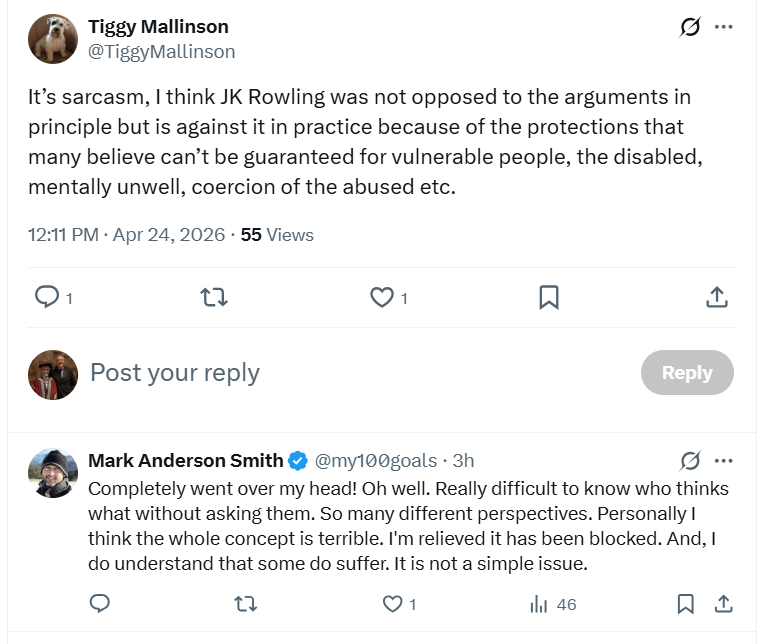
Rowling’s Sarcasm about ‘Assisted Dying’ (Medical Murder) Escapes Fans

Url to Tweet Above

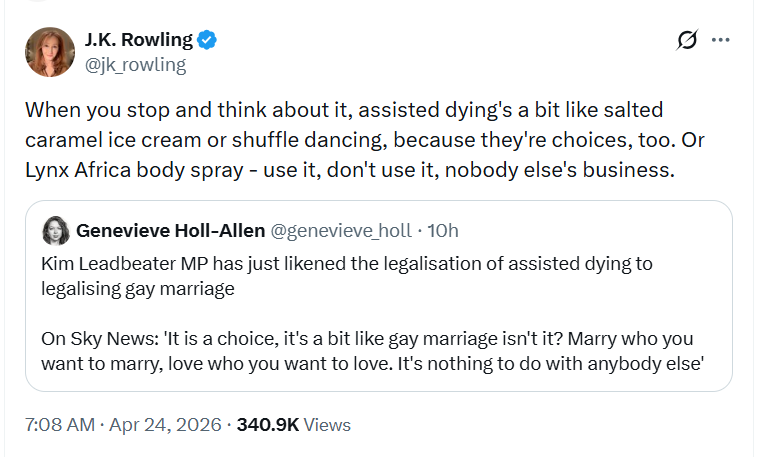
A casual reading of Rowling’s tweet this morning about the “legalisation of assisted suicide” suggests that she is in favor of making into law the suspension of the Hippocratic Oath‘s prohibition of a doctor’s killing a patient intentionally:

I will use those dietary regimens which will benefit my patients according to my greatest ability and judgment, and I will do no harm or injustice to them. Neither will I administer a poison to anybody when asked to do so, nor will I suggest such a course. Similarly I will not give to a woman a pessary to cause abortion. But I will keep pure and holy both my life and my art. I will not use the knife, not even, verily, on sufferers from stone, but I will give place to such as are craftsmen therein.

This is sadly a credible reading because Rowling has expressed several times her support for laws allowing pre-natal infanticide, a murder of the innocent expressly forbidden in the Oath. Regardless of its credibility, the great majority of Rowling’s 13.8 million twixter followers who responded were appalled by her seeming support of said “legalisation” (see here, here, here, and here) and more than one celebrated it (see here and here).

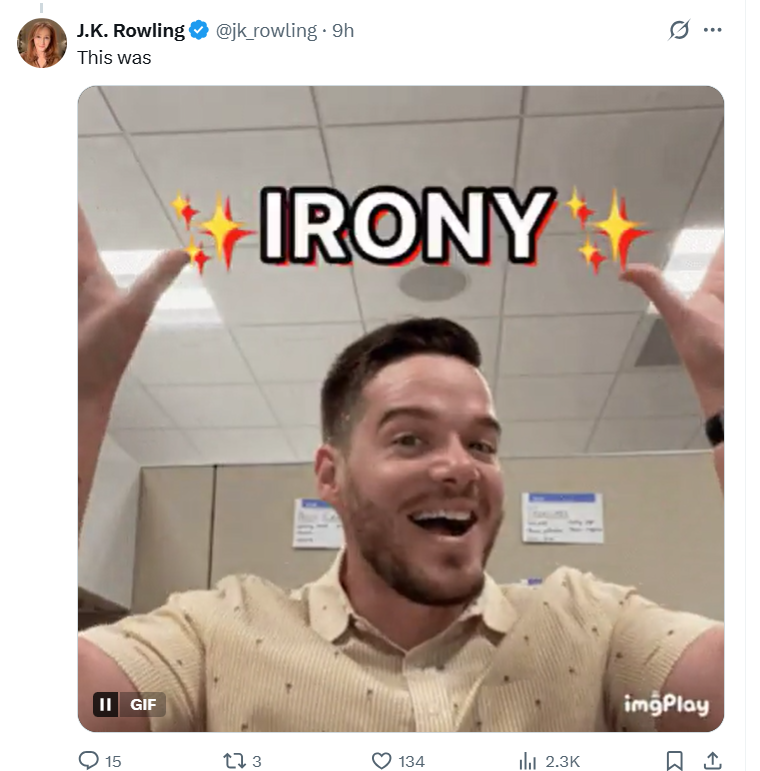
Both reactions misread her tweet. It is a sarcastic response to the assertion that killing someone is a “choice” equivalent to “gay marriage” rather than an irreversible ending of human life, one that is much too often the result of coercion and manipulation rather than free and rational choice.

How do we know this for sure? First, because Rowling has tweeted previously her position against “assisted dying.”

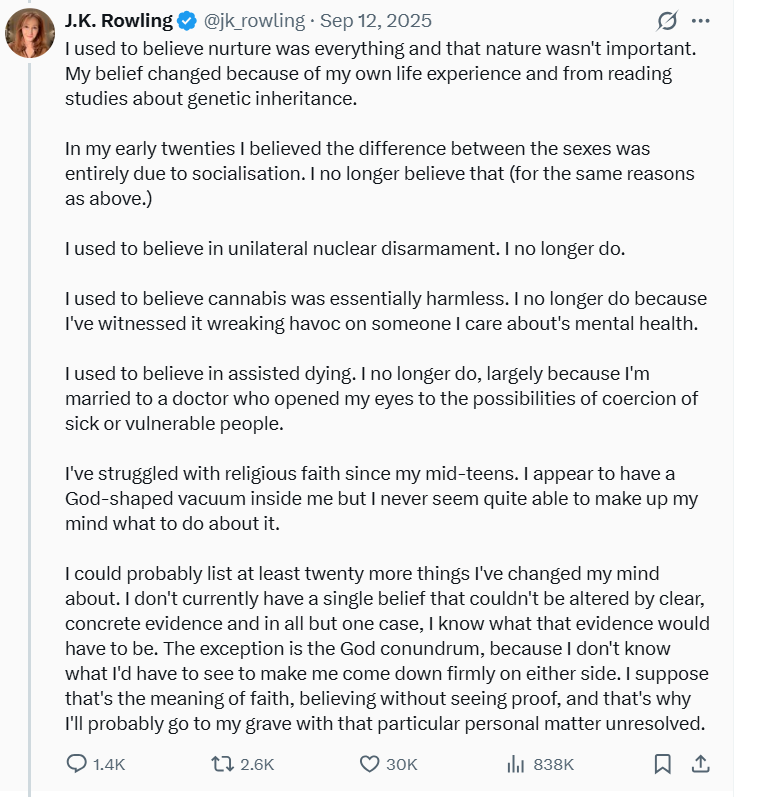
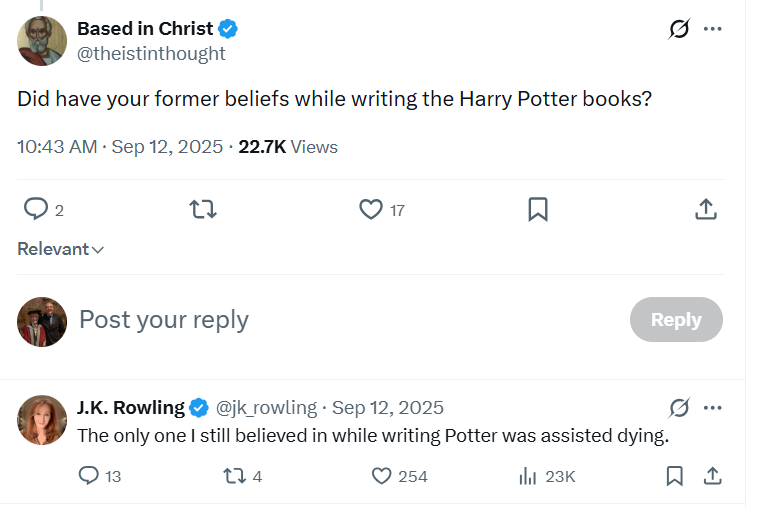
Second, we know that she isn’t pro “assisted dying” because Rowling finally felt obliged to spell it out:

Nick Jeffery and I discussed the tweets and the several others Rowling posted in the wake of the assassination of Charlie Kirk. You can find that conversation about perhaps the most meaningful and personal tweets Rowling has made about her beliefs over at the Hogwarts Professor Substack site: Hallmarked Man and Rowling’s Tweets after the Shooting of Charlie Kirk: The Four Definitions, the Fixed Beliefs She has Given Up, Her Doubts about “Religious Faith” in God, and the Evisceration of Emma Watson.

‘Hunger Games: Sunrise on the Reaping’ Trailer Released — The Gamesmakers Are Getting Better at Ironic Filmmaking

We’ve come a long way since the hijacking-via-movie-adaptation of the first book in the series.

In that film we were presented with the Gamesmakers as heroes contrary to the point of Suzanne Collins’ brilliant take-down of the Capitol Cave shadow-casters in Hunger Games, the novel. Not to mention their casting per Hollywood formula buxom Jennifer Lawrence as Pippi Longstocking half-starved, pipe-cleaner shaped Katniss Everdeen.

Am I naive for hoping this fifth Hunger Games adaptation, the movie version of Sunrise on the Reaping, is at last getting the point of the stories, just in time for Haymitch Abernathy’s origin-story?

The trailer is encouraging, I think; there are hints at least that the film makers are going to let audiences see the anti-narrative rebellion of everyone’s favorite character in the original trilogy.

But I await Elizabeth Baird-Hardy’s expert opinion!

Annie Crawford: The Cosmic Alchemy of C. S. Lewis’ ‘That Hideous Strength’

I have been talking about the literary alchemy of C. S. Lewis’ Ransom Trilogy of which That Hideous Strength is the finale since 2005 when I gave a talk on the subject at Dr Amy H. Sturgis‘ ‘Past Watchful Dragons’ conference at Belmont University on the ‘Fantasy and Faith’ of Lewis. I was invited at that gathering to speak to the New York C. S. Lewis Society in January 2008 on the same subject which led to a date in April 2010 at the Oklahoma City C. S. Lewis Society conference to revisit alchemy in outer space. That trip led to my family’s move to OKC, believe it or not, later that year.

It’s a subject dear to me and I hope that Annie Crawford’s talk about the third book’s ‘Cosmic Alchemy’ fosters an interest in the traditional and literary hermeticism in CSL’s work beyond and in tandem with the astrology.

Here are links to three Substack posts about literary alchemy which touch at least tangentially on Lewis’ occult artistry:

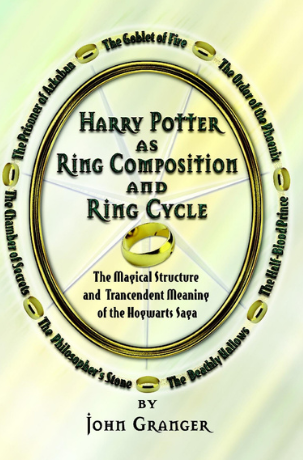
I share in the last one the story of how I learned about ring composition via my search of Lewis scholarship in 2010 to see if anything had been written about the hermeticism embedded in the Space Trilogy; there wasn’t, but, reading Sanford Schwartz’ C. S. Lewis on the Final Frontier: Science and the Supernatural in the Space Trilogy in that search, I was introduced to Lewis’ chiastic writing and to Mary Douglas which led directly to my writing Harry Potter as Ring Composition and Ring Cycle. Imagine Rowling Studies today if I hadn’t been exploring C. S. Lewis scholarship to learn more about her hermetic artistry and meaning; a very different place!

Let me know in the comment boxes below what you think of Annie Crawford’s ‘Cosmic Alchemy in That Hideous Strength‘ and my various pieces linked above! If you want my notes and Power Point slides on Lewis and alchemy, drop me a note at john at HogwartsProfessor dot com and I’ll send them on.

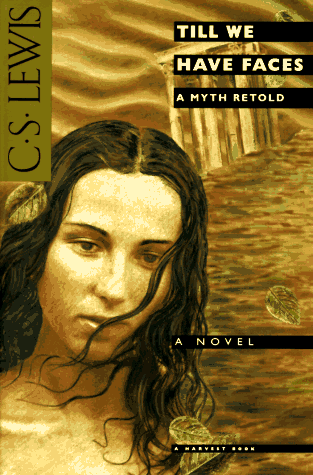
The Cupid and Psyche Myth Retellings: C. S. Lewis’ ‘Till We Have Faces’ and J. K. Rowling’s Cormoran Strike Novels

At the Hogwarts Professor Substack page, Nick Jeffery and I both wrote pieces this month about C. S. Lewis’ Till We Have Faces and Rowling-Galbraith’s Strike-Ellacott mysteries. We then filmed our conversation about why the Serious Striker or Generic Thoughtful Rowling Reader would benefit from time with CSL in the Kingdom of Glume, Queen Orual presiding.

I began my post about the two Cupid and Psyche adaptations with several reasons reading Till We Have Faces is a very good investment of any Rowling fan’s time:

First, anything by C. S. Lewis rewards a close reading by any thoughtful person and lover of challenging modern writing (and, though Lewis is often dismissed as some kind of Christian dinosaur, he is a thoroughly modern writer). Faces was his last fiction piece, he and Tolkien thought it was his best, and it is a catharsis inducing masterpiece, frankly, that makes a more than generous return on any time invested in it.

Second, despite Rowling’s several digs at Lewis near the end of Potter Mania’s peak around the publication of Deathly Hallows, it would be hard to exaggerate the hat-tips and references to CSL’s Narniad in the Hogwarts Saga. Rowling’s efforts to diminish if not dismiss that influence have to be read in tandem with her earlier effusion of admiration for Lewis and his work. Her Christmas Pig, I think, can be read as her attempt — her wonderfully successful attempt, by the way, at least with respect to accessibility and humor — to out-do Lewis’ The Great Divorce. Reading Lewis is a good idea for the Serious Striker, then, because its a decent bet based on the postmodern writer’s track record that the bibliographical inspiration or Lake aspect of her work might be found in his writing.

Third, forget the Lake, Rowling’s Shed is filled with tools that Lewis used.

  • Literary alchemy? Read his Space Trilogy.
  • Ring composition? Every Chronicles of Narnia novel and Space Trilogy piece is chiastic.
  • Psychomachia or Soul-Allegory? Pilgrim’s Regress, Great Divorce, Till We Have Faces.
  • Genre Blend with Heavy Doses of Literary Allusion? Again, the Narniad and Space Trilogy.
  • Christian symbolism? If Lewis is known for anything, loved by his fans and despised by his detractors, it is because of his “smuggling the Gospel” into his stories, not-so-subtly and supremely subtly (see Planet Narnia for exposition of the latter).

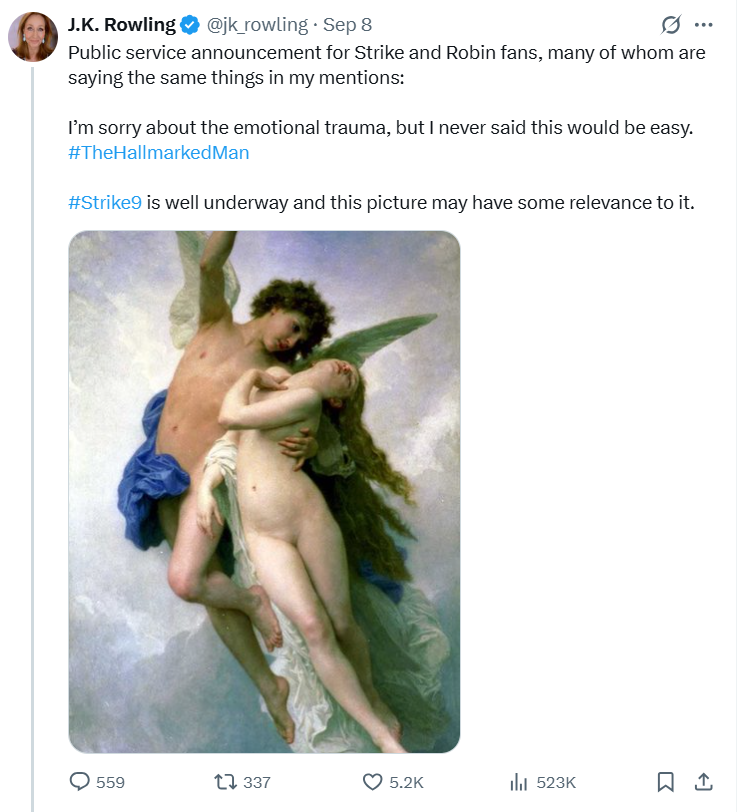
And to the point today, use of Classical myth as a story launching pad and template. Serious Strikers know that the Strike-Ellacott series is up to its eyeballs in mythic backdrops; think of Leda and the Swan, Castor and Pollux, Tisiphone and Artemis, and, the only one confirmed by the author via tweet, Cupid and Psyche. Lewis’ Till We Have Faces is a re-telling of this exact myth.

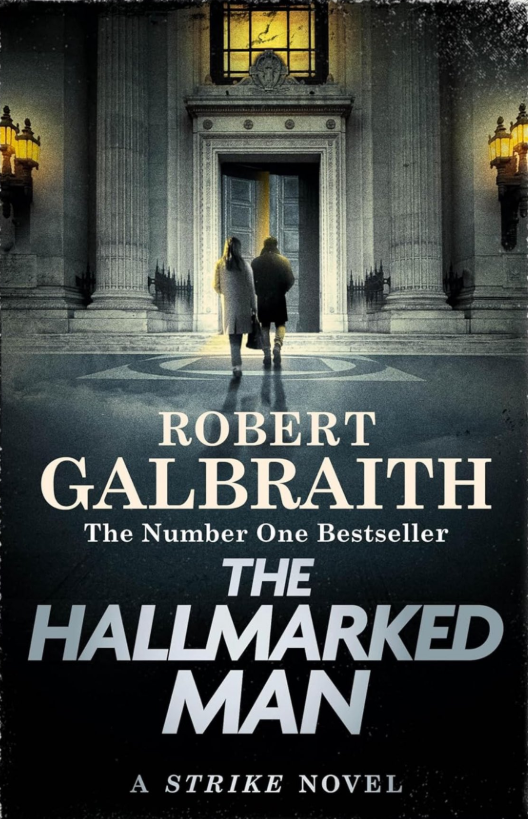
It’s not a direct match by any means. Lewis’ adaptation is fairly straight-forward (well, relative to Rowling-Galbraith’s). He re-tells the Cupid and Psyche myth from the perspective of one of Psyche’s supposedly jealous sisters. It’s still set in a mythic time and in a pagan or pre-Christian Greece (or thereabouts). Rowling uses the myth, in contrast, as a near invisible back-drop or atmosphere that informs her story, a subtle deployment that wasn’t noticed by readers until its reveal in Troubled Blood and Ink Black Heart (a revelation that wasn’t accepted by fandom until Rowling’s tweet post Hallmarked Man).

Nick Jeffery wondered if it was possible that Rowling-Galbraith used Till We Have Faces as something of a template’s template for her adaptation of Cupid and Psyche in her Strike novels. Read his C. S. Lewis’ ‘Till We Have Faces’ and Rowling-Galbraith’s Cormoran Strike Series (Part One) for his answer to the question, ‘Is Till We Have Faces the The Thematic Template for the ‘Strike-Ellacott’ Series?’

In my follow-up to Nick’s post, C. S. Lewis’ ‘Till We Have Faces’ and Rowling-Galbraith’s Cormoran Strike Series (Part Two), I shared the seven points of intersection I found in CSL’s 1956 adaptation and JKR’s eight Strellacott books: the underlying myth, Artemis and Aphrodite, the Pursuit of the Real, the Hidden Nature of Divinity, the Story Structure, the Meaning of ‘Faces,’ and the Eros-Anteros Distinction (what Lewis called ‘The False Cupid’ in his essays on Spenser).

In our subsequent discussion-podcast, A Spirited Conversation about Rowling-Galbraith’s Cormoran Strike Series and C. S. Lewis’ ‘Till We Have Faces,’ we reviewed our findings and played pickle-ball with the subject of what Faces might suggest about the contents of Strike 9, tentatively titled Sleep Tight, Evangeline.

Nick and I will be talking about fan theories and Rowling’s Golden Threads this week and I will be writing about the literary alchemy of the Lions in Hallmarked Man as well as more notes about the plethora of names in Strike 8. I also hope to share the introduction to and TOC for my book in progress, Harry Potter for Grown-Ups: Volume 1 Philosopher’s Stone, and a chapter of the only book to my knowledge written exclusively about the Perennialist Theory of Literature, the school of thought best suited to grasping the traditional tools used by both Lewis and Rowling in their stories.

See you there!