Rowling Reveals Mental Image of What Lives in Her Lake of Inspiration
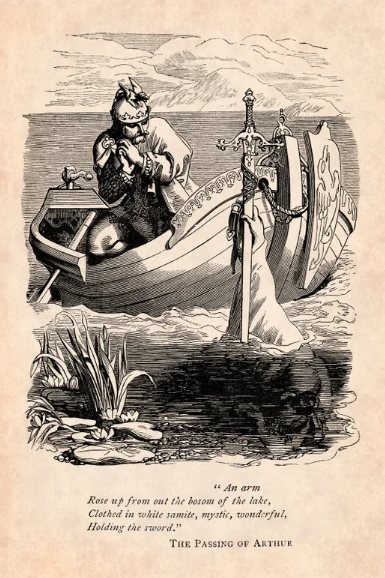 Rowling’s 2019 interview for the BBC’s Museum of Curiosity was where she chose to roll out her mental metaphor for her method of writing, namely, the Lake and the Shed. In brief, the Lake is how she visualizes her unconscious mind giving her the unshaped story stuff, something like “molten glass,” that she works into proper narrative form with her literary toll kit in the Shed. She admitted that this source of inspiration was cued to her subconscious struggling to resolve issues. You can read more about that interview and her much more recent version of this metaphor by reading The Lake and The Shed: Rowling Reveals Her Writing Process or listening to the ‘Rowling Studies’ podcast about the author’s 2024 ‘On Writing.’
Note that in the 2019 interview, Rowling says she never sees what it is that is in her Lake:
I feel as though the inspiration is the thing that lives in the lake that’s very mysterious, that I never see. But it hands me stuff. And then I have to take this unformed stuff – sometimes it can be reasonably formed, sometimes it’s very blobby like molten glass or something, and then I have to take it into the shed and there I have to work on it.
In May of this year, though, Rowling admitted that she had a very clear image in her imagination of what the story-inspiration-genie or Lady of her Lake looked like:

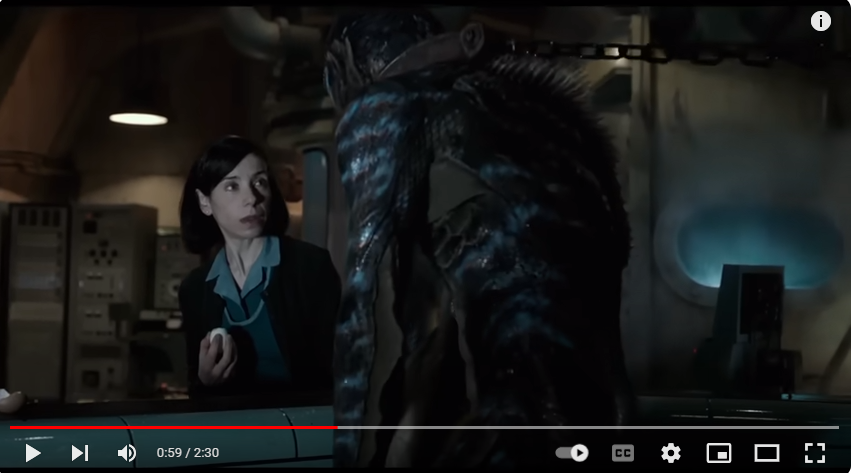
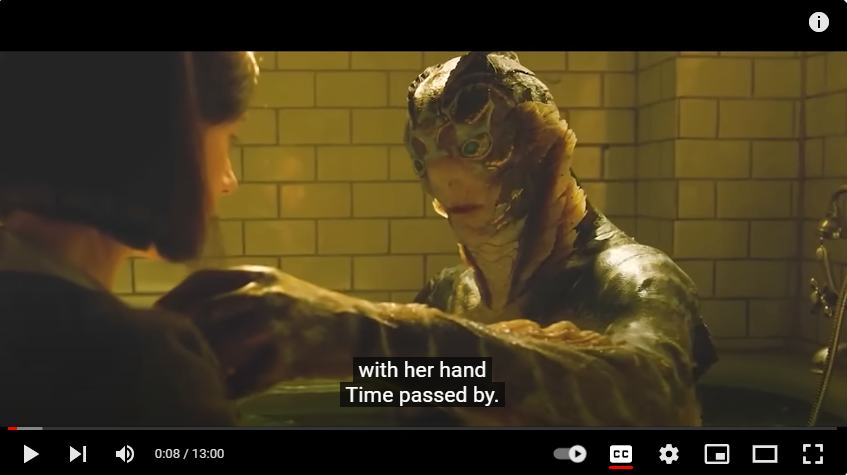 Images of that android amphibian are readily available, of course. Not an especially handsome guy, at least, not if your mental picture was something akin to illustrations of the Lady in the Lake from Tennyson’s Idylls of the King as mine was. What’s interesting to me, though, was Rowling’s description of the movie creature as looking “EXACTLY like the thing I imagine” in her metaphorical Lake and the powers of this creature in ‘The Shape of Water.’ If you’re not familiar with the movie, I attach both the trailer and a YouTube quick telling of the story below this post and the Wikipedia plot summary can be read here.
 There are three dots that I think Rowling is connecting here: her core belief about imagination as such, the power and substance of the “unconscious” mind, and the Logos or Christ. I’m sure that must seem a reach, but bear with me. The title of my PhD thesis was ‘The Lake and the Shed: A Traditional Reading of the Work of J. K. Rowling,’ so I’ve given this Lake subject and Rowling’s ideas of the imagination some thought. Join me after the jump for my connections of those implausible dots.
Her ideas of what imagination, as she described them in her address to Harvard graduates in 2008, were remarkably Estecean, which is to say they echoed the definition that Coleridge gave to his ‘Primary Imagination,’ the idea that informs English High Fantasy from The Rime of the Ancient Mariner through Harry Potter. In that commencement speech she described the power of imagination as the ability of one person to empathize with another; she urged the privileged graduates that were listening to her in Cambridge not long after the publication of Deathly Hallows to change the world and help others through their ability to “imagine better.”
Coleridge defined the “Primary Imagination” as “the living Power and prime Agent of all human Perception, and as a repetition in the finite mind of the eternal act of creation in the infinite I AM.” Those familiar with the Bard of Ottery St Mary’s logos epistemology understand that he is speaking here of the logos capacity within us (cf. the logos light of John 1:9) that is our means of knowing anything because of its continuity with the Logos fabric of reality (cf. John 1:3). Rowling’s imagination as one’s capacity to identify with another person’s condition, to empathize with him or her, and want to help is much more from this idea of Coleridge’s than contemporary neuroscience.
So what? Well, two things. Skip the first if you don’t want the story spoiled.
First, if you’ve read the story summary, you know that the android amphibian of The Shape of Water has the ability to heal all infirmities, even to raise the dead. He saves the heroine in the end, one who died a sacrificial death in love for him, someone completely other. I hope the Christian understanding of this creature’s capacity for love and healing, not to mention transformation of those who trust in Him, is obvious to you.
Second, Rowling tweeted that she “imagines” this creature as the one who lives in her Lake of inspiration. I admit this next point is a leap but I offer it only as a possibility for your consideration. I understand that she did not say or even suggest that anything but the appearance of the android amphibian was like her Lake inspiration-genie.
Having noted that, I find the connection of a Christ-like power with the unconscious mind — let’s say the super- rather than the sub-conscious part of her thinking — that wrestles with her unresolved issues and gives her imaginative story-stuff a very tempting association, especially if she feels transformed or healed somewhat in this process. I won’t lean on this theory, of course, but I will keep it in the back of my mind, especially as we learn more about Rowling psychological studies, spiritual beliefs, and their relationship with the archetypes of story (for more on that last, see The Rowling-Fry Talk about Fantastic Beasts).
Enjoy the film clips below for The Shape of Water!