 File this under ‘Shared Text’ and ‘Chicagwarts.’ The post below is taken directly from an email I received this morning from the University of Chicago Alumni Association (for my relations with and debts owed my alma mater, see ‘Harry Potter and the Ivory Tower’ (2008), an article in the alumni magazine, and my interview with Marcella Delaurentis of ‘The Chicago Maroon,’ the College’s newspaper, also in 2008). Of all the book-drinks featured in Literary Libations, they chose Harry Potter’s, for what I think are obvious ‘Shared Text’ reasons. I cannot recommend the butterbeer recipe below because brown sugar is a poison but, if this is your poison of choice, have at it!
 With Bram Stoker’s Dracula, a Bloody Mary.
With Emily Brontë’s Wuthering Heights, a brandy hot toddy.
Those are just two of nearly 200 drink pairings that Amira Makansi, AB’10, suggests in Literary Libations: What to Drink with What You Read (Skyhorse Publishing, 2019).
The book also includes nonalcoholic pairings for young adult and children’s books. For the Harry Potter series, the choice is butterbeer, of course. Here’s how to make it.
1 c. brown sugar
2 tbsp. water
6 tbsp. butter
½ tsp. salt
½ tsp. apple cider vinegar
¾ c. heavy whipping cream, divided
½ tsp. rum extract
4 (12 oz.) bottles cream soda
In a small saucepan, over medium heat, combine the water and brown sugar and bring to a boil. Stir often until the mixture reads 240˚F on a candy thermometer.
 Remove from heat and promptly stir in butter, salt, cider vinegar, and ¼ cup whipping cream. When fully incorporated, set aside to cool. When mixture has cooled, stir in the rum extract.
Combine 2 tbsp. of the brown sugar mixture and the remainder of the heavy cream in a medium mixing bowl. Using an electric mixer or a stand mixer, beat the heavy cream until just thickened, but not completely whipped. This should take 2-3 minutes.
To serve, divide the sugar mixture between four tall, chilled glasses. Add ¼ cup of cream soda and stir to combine. Top with the remainder of the cream soda and spoon the cream over the top. Makes four servings.
 The great lacuna in Potter studies is what Rowling read and loved in her French studies at Exeter and beyond.
 Charles-Marie-Georges Huysmans(5 February 1848 – 12 May 1907) was a French novelist and art critic who published his works as Joris-Karl Huysmans,
 Là-bas
 I wonder if Huysmans was well known to the Presence through her French studies at Exeter or travels in France and if she thought her life as a school teacher and sometime writer when she became J. K. herself would parallel his life as a civil servant cum author when she chose the ‘K’ for her faux middle initial.
 Huysmans is not a big name in French studies as far as we know.
 I reached out to Beatrice Groves as well. Nope; this French novelist J. K. is not an author with whom she is familiar.
 On the thread discussing ‘
 Novelists have their popular stories ‘adapted,’ which is to say ‘transformed, changed, and diminished,’ by movie makers. The original creators usually have little say in these medium metamorphases which are done by a screenwriter or a team of such, and, much more often than not, the new story is what most people remember of the work rather than the original creation and point which was the book. Nabokov was asked to write the screenplay for the first Lolita adaptation,
 So what do novelists get? They get a huge payday both in the form of payment for movie rights and from royalties (a successful film even if a bad or distortive adaptation, and, again, due to the opposing nature of the media, imaginative vs straight sense perception, all adaptations are inherently distortive and diminishing – will revive interest in a book indefinitely).
  Is there a way out of this bind except refusing the Tinsel Town galleons? Not really, especially if the author is beholden to charity commitments as Rowling is, or if the film rights to a work have been sold long ago as with Fantastic Beasts (with little thought perhaps given to its adaptation), or if an Estate faces family members who crave film gold and royalty revival (I think, forgive me, of the C. S. Lewis group, alas).
 (1) A Dickensian ‘New Edition’ Payday: Dickens famously sold his novels in three chapter bundles as he wrote them, then repackaged and sold the complete book, and then came out with various ‘Collector’s Editions,’ all of which issues of the same book gave him a new income stream. Rowling, by publishing her truly original novels after the film screenplay collaborations, gets paid twice for her work. And, forgive me, these novels would sell the way the Harry Potter books did because they are Wizarding World stories from the hand of the One and Only.
 (2) Exposure of the Screenwriting ‘Sausage Making’ Process: By giving us the true story, readers who have seen the movies (which, frankly, is ‘all readers’) will inevitably be saying as they read, “Oh, wow! That was isn’t the film! Why did they cut that out? That’s really important….” Rowling will exact revenge for all novelists who cannot believe what was cut from their stories in the film making and what made up in conformity with film-making formula (“A chase scene or two! In The Lion, the Witch, and the Wardrobe!”) but who cannot complain because they took Babylon’s money in exchange for rights to their work. Writing or just publishing the true stories, ‘true’ in the sense of fidelity to the original vision of the author of course,after the films shows just how little of that vision survives the inane demands and story-butchery of film making. Which is genius, frankly, and a characteristically Rowling-esque subversive twist on the power holders. Think Hermione and The Quibbler.
 (3) Revelation to Film Devotees of Media Reality: The follow-up novels, more importantly if much less obviously, might also expose to the more thoughtful reader the inherently diminishing and distortive effects of film adaptations. Movie lovers are — without exception in my limited experience — blissfully unaware of the iconoclastic quality of the medium they prefer, a story-telling medium that serves and reflects the materialist and inherently secular ideas defining the historical period in which we live. By reducing by transforming imaginative immersion to sense perception, all that films can communicate in the end is fear or emotional sentiment, hence the importance of physical beauty and the inevitable chase. Rowling’s reverse-play, by giving the reader of the true story a much greater experience than the film version, would be revealing the paucity of the movie medium.
 Unfortunately, this last falls victim to the same trap that the usual sequence of novel-to-film gives readers. Rowling’s feast for the reader imagination and the much broader spectrum of interior experience and transformation in Newt Scamander stories will inevitably all be restricted in reader minds to their mental pictures from the films of what Newt, Jacob, Queenie, Tina, Gellert, Albus, and Company look like and behave.
  There’s really no winning here, in other words, on that score; the Salinger Option is the only way to retain control and its ascetic quality is all but anathema in this time period.
 Bronte Studios has begun filming the adaptation of Lethal White for BBC1 written by screenwriter Tom Edge. Tom Burke and Holliday Grainger are back in the lead roles as Cormoran and Robin and the actors who have played Charlotte and Matthew return as well.
  Burke (The Souvenir, War And Peace) and Grainger (Animals, The Capture) lead a cast of acclaimed British actors including Robert Glenister, who most recently starred in Curfew for Sky Atlantic, other credits include Paranoid, Journey’s End and Live By Night as well as conman Ash “Three Socks” Morgan in the hit BBC One series Hustle. Glenister also read the audio-book versions of the Robert Galbraith books including Lethal White. Natasha O’Keeffe (Peaky Blinders, Sherlock) and Kerr Logan (Alias Grace, London Irish) also return as Strike’s ex-girlfriend and Robin’s fiancé respectively.
 I look forward to the day (if I live long enough to see it — I don’t think this day will be coming anytime soon) when we learn the background machinations of The Presence in all things Cormoran Strike, from her planning and writing of the books to the adaptations for the wee screen and the serendipitous casting of Burke as Rosmer in the West End revival production of Rosmersholm the summer before Lethal White is filmed. I suspect that Glenister’s casting as Chiswell was as much a coincidence as Burke’s was, which is to say, “not an accident at all.”
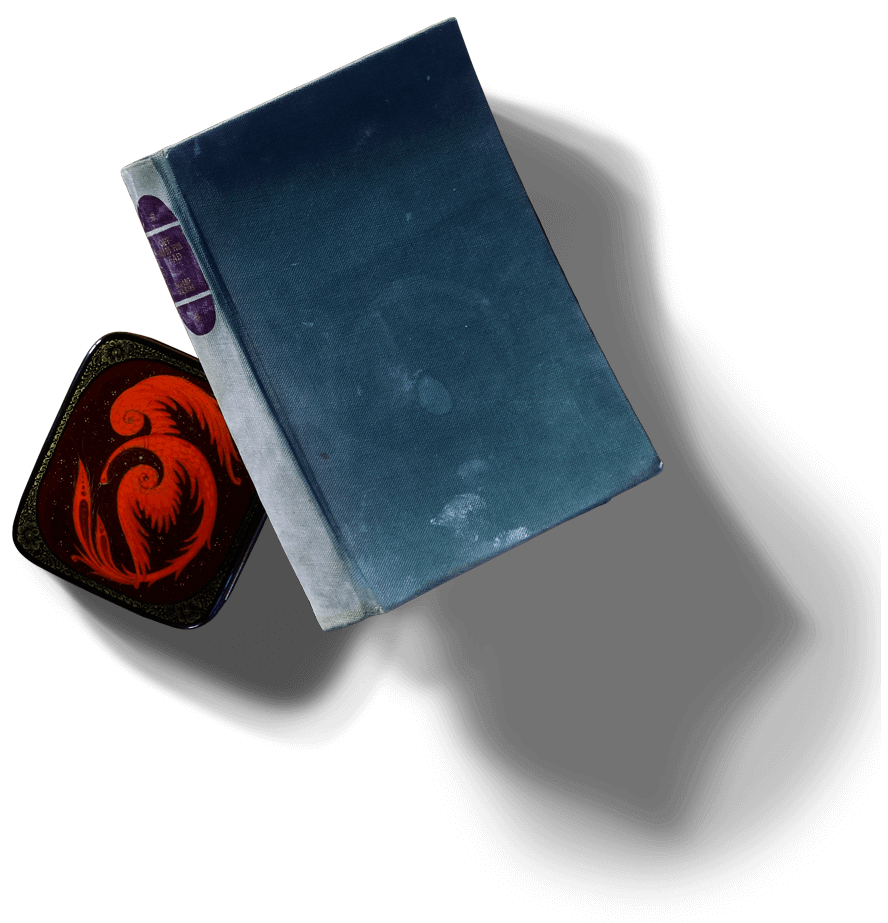
 Rowling’s home web site is not PotterMore; it is JKRowling.com. It’s worth a visit every month or so to see what she’s put up there. Early this year I noticed a book cover I’d missed on previous drop-ins. The title is barely legible (see picture on the right), but it turns out to be Ngaio Marsh’s
  But — Alchemy (the forge!), the Fool (see
Recent Conversation