‘The Woman Who Walked Into Doors’ Rowling’s Favorite Contemporary Author

Sevenyears ago I started a post on Roddy Doyle’s The Woman Who Walked Into Doors but never finished it. In light of Rowling mentioning him as her “favorite living author” in the 1998 interview with Jennie Renton, I thought it as good a time as any to finish it up and send it out. I won’t revise the context of my first reading Doyle’s Woman (1996) or the sequel Paula Spencer (2006)– my laborious PhD survey of Rowling’s admitted influences — but I will share more of Rowling’s raves about Roddy. Enjoy!

I’m reading novels recommended by J. K. Rowling this year as part of my research into probable influences on the most important patterns and parodies in her work. I’m learning a lot and I hope you’re enjoying my hurried posts that I make here — on Molesworth, on Lolita and Pale Fire, even Margery Allingham — in the rush after finishing a book lest I forget what excited me about it.

Some authors and books are ones I’ve never heard of, frankly. The Legend of Manon Lescaut? Paul Gallico’s Manxmouse? If Rowling hadn’t said they were important to her, the odds are very good I never would have picked them up (because they’d never crossed my path). Some are books by writers whose work is unappealing to me after I learn about it. Rowling has said Colette is one of her three favorite writers repeatedly and recommended Cheri to readers. Stories about Cougar courtesans in Paris really aren’t my thing.

In that category, too, I confess, has been a book by The Presence’s “favorite contemporary author,” Roddy Doyle. Rowling recommended The Woman Who Walks Into Doors to Oprah Winfrey herself for that personage’s Instant Best Seller Book Club. I’ve had it on my shelf for years and never picked it up. I finished it late last night.

Here are my three best reasons after the jump for thinking you might want to read it, too, for a better understanding of J. K. Rowling and what she’s after in her work. [Read more…]
Waiting for Rowling’s Hallmarked Man? Try Lou Berney’s Shake Bouchon Books


J. K. Rowling tweeted a message on her return from her birthday cruise around Greenland that it had a been a working vacation, which is to say, she was still writing Hallmarked Man. Even given the clue that she was working on the last part of the book, hence that she may have finished it, we’re a long way from publication. A release before the new year seems unlikely.

Serious Strikers have several options for filling the time remaining before our next fix of the Robin and Cormoran show.

The first and most obvious would be to re-read the first seven novels in the series so it’s all fresh and in the forebrain on opening Hallmarked Man. There’s a lot of work that hasn’t been done in terms of grasping how these books work and what they’re about that anticipation of the new book obscures; I’m thinking of the possibility that Rowling is writing a ten book catalogue of story-types a la Boris Akunin’s Erast Fandorin series as well as the charting of Ink Black Heart, a remarkably complex novel whose structure has been given minimal attention.

The next option would be to read work that is tangentially important to previous Strike novels and to the future one. Books, opera, and a play that come immediately to mind are Ibsen’s Rosmersholm, Spenser’s Faerie Queen, Wagner’s Lohendrin, Barret Browning’s Aurora Leigh, Dylan Thomas’ Complete Short Stories, and, in anticipation of Hallmarked Man, Oxenham’s Maid of the Silver Sea. There are the non-fiction books, too, to pass the time profitably; check out the psychology of cults titles recommended by Strike’s half sister in Running Grave (try Hassan’s Combatting Cult Mind Control if you only have time for one) or Neumann’s Amor and Psyche and Johnson’s The Fisher King and the Handless Maiden for the Jungian mytho-psychological backdrop of the Ellacott-Strike relationship.

And then there is the ‘mental floss’ option, by which I mean not reading anything Strike related but fiction that resonates with this series in progress. Try to find thriller-mystery series with a compelling love story in the backdrop, a heavy dose of humor, and a writer of recognized craftsmanship, preferably one with a background in the ‘Greats.’ They don’t grow on trees, I know, but I’m sure they’re out there.

Which brings me at last to the subject of this post.

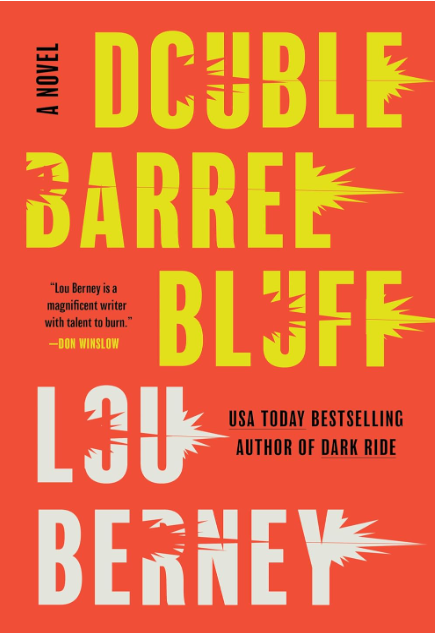
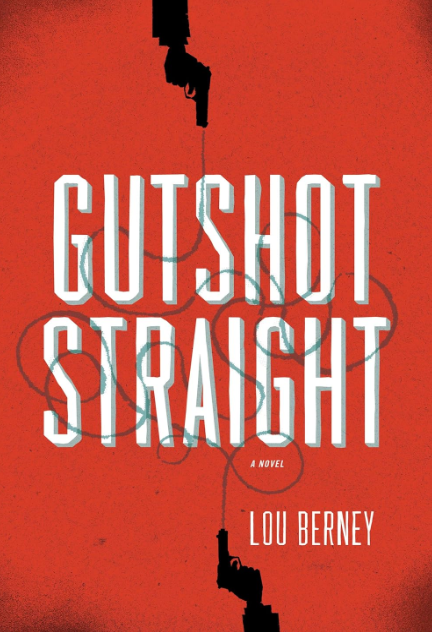
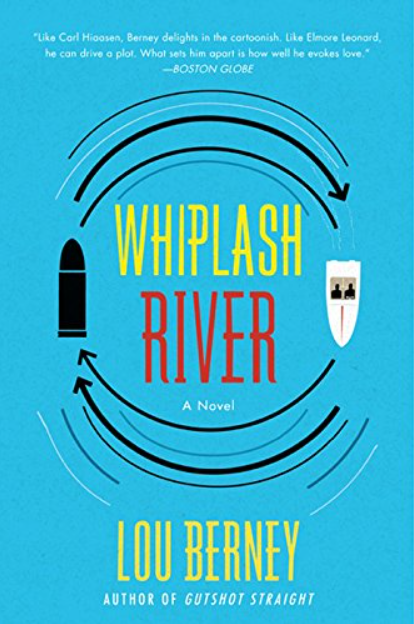
Lou Berney has written two Shake Bouchon novels, Gutshot Straight and Whiplash River, and the third, Double Barrel Bluff, will be coming out the first week of November. I’ll be writing about it, believe me, as the United States sorts out what promises to be a rough month of disputed election results. I’m counting on Berney’s latest (and final?) Shake novel to get through all that.

Berney is the real deal as far as craftsmanship goes. His books have won the Macavity Award for Best Mystery Novel, the Hammet Award, the Barry, Anthony, and Edgar Awards more than once, and the Crime Writer’s Association coveted Silver Dagger Award. He taught the Great Books at a private college in California for ten years and two of his novels, Long and Faraway Gone and Dark Ride, reflect his close reading of the Commedia and Don Quixote.

The Shake Bourdon books are Berney’s love letters to Elmore Leonard and Carl Hiaasen, comic noir writers, the way his later work reflects his admiration for Kate Atkinson. Which means they are funny; not Wodehouse slapstick stuff, but dry, delightful humor in minimalist dialogue and brilliant plot twists and narrative somersaults with exotic but credible characters.

And the romance backdrop? The Boston Globe in its review of Whiplash River noted, “Like Carl Hiaasen, Berney delights in the cartoonish. Like Elmore Leonard, he can drive a plot. What sets him apart is how well he evokes love, making the romance…as compelling as the mystery.” The relationship of Gina and Shake with a Charlotte-esque Armenian mafia boss haunting them, definitely will act as a fix for those starved of Strike-Ellacott relationship dopamine hits.

I am currently re-reading Gutshot and Whiplash because the author, who lives in Oklahoma City, believe it or not, has given me a reader’s copy of Double Barrel Bluff. I’m not quite a glee fan girl in my enthusiasm for Berney but my son Zossima and I do enjoy reading and re-reading his books and talking about them which puts him in fairly exclusive company.

My favorite Berney novel remains Long and Faraway Gone, not only because it is set in OKC (the Shake novels inevitably travel from the US to an exotic foreign dangerous locale) but because of its intricate structure that has survived my charting of it; the parallel story lines which intersect more than once deliver a story of complementary antagonism that is masterfully executed and a delight on first, second, and third readings.

If you choose to go the ‘mental floss’ option in the long wait we have before the publication of Hallmarked Man, then, I recommend you check into Lou Berney’s work and especially the two Shake Bourdon books in print and the third coming out election week. Enjoy!


Jennie Renton’s 1998 Rowling Interview

The Rowling Library’s September issue, perhaps its best ever, included the story of J. K. Rowling’s 1998 interview with Jennie Renton for a fairly obscure magazine aimed at rare book sellers in Scotland. The TRL story of the original story’s surfacing and the various versions of it that had appeared in other much more widely read periodicals and online is very much worth your time; it can be downloaded here.

Rowling’s ‘early year’ interviews, those done before the creation of Rowling, Inc., the break with her Christopher Little, and the establishment of the Franchise Fortress round her every public appearance and statement, are relatively wide-open in terms of the questions being asked and the answers offered in return. I thought it worthwhile, then, to go through the unguarded Jo Rowling’s answers to a thoughtful interviewer’s questions soon after the publication of Harry Potter and the Chamber of Secrets. Join me after the jump for a line by line review.

Is there any chance Rowling would throw off the self-imposed restrictions on her interviews and take questions from those who have been studying her work for decades? As I wrote in ‘Is Rowling a Coward?’, this is extremely unlikely for a variety of reasons, all along the spectrum defined by the poles of ‘Admirable Prudence’ and ‘Open Cowardice.’ Should she reconsider, I have a list of twenty-five questions from HogwartsProfessor staff and contributors I will gladly forward to her barristers and PR handlers for their vetting.

Until then, let’s go back to the 90’s for a talk with the Freewheelin’ New Hit Author, Jo Rowling! If you’d like a video image of what she looked like 25 years ago, here is a YouTube clip of her speaking with 60 Minutes in 1999. “Ah, but I was so much older then
I’m younger than that now
” (Bob Dylan, ‘My Back Pages’).

[Read more…]

Is J. K. Rowling a Coward? Three Topics About Which She Will Not Speak

To risk understatement, I am a J. K. Rowling fan. Bum Phillips once said about Earl Campbell that the running back may not be the only person in his class but “it doesn’t take long to say roll.” I think that can fairly be said of my contributions to Rowling Studies from 2002 to the present day. As one Serious Striker wrote to me last year, one who incidentally is not currently a fan or a friend, “No one has contributed more to the understanding of J. K. Rowling’s work than you have.”

I am the “Dean of Harry Potter Scholars” and have invested what time I have in her work only because I think Rowling is a great writer and an important one. C. S. Lewis said once that the 20th Century would be known to literary historians as the ‘Age of Charles Williams’ the way that critics talk about Shakespearean England or Byron’s Era. No sign of that coming about, alas, as prescient as Lewis was; it seems much more likely and merited in terms of reach, depth, and accomplishments, literary and philanthropic, that the 21st Century will be known as the ‘Age of Rowling.’

I lay out those credentials and views in order to introduce a subject that may disturb Rowling-philes as well as her harsher critics. That subject is Rowling’s courage, and, specifically, her lack of courage, call it cowardice, on at least three points.

Courage is important to Rowling’s self-identity so a failing with this respect to this central virtue is no small thing. Remember her comments about why she admired Robert F. Kennedy, Sr., at the Ripple of Hope Award ceremony in 2019:

Robert Kennedy embodied everything I most admire in a human being.

He was morally and physically courageous, and, like Churchill, I believe that courage is the foremost of the virtues because it  guarantees all the others. He looked beyond the invisible but powerful boundaries that can insulate people of privilege from the rest of the world and he looked into those dark corners where poverty and discrimination and injustice breed. He was a man of both empathy and action and he brought about real change and he continues to inspire people beyond the boundaries of his of his own country — and I’m not sure we can ask much more of any politician or indeed of any human being.

Read RFK, Sr’s 1965 Affirmation Day speech in South Africa, the so-called ‘Ripple of Hope’ address, for a good bolt of that moral courage and daring political boldness as well. Rowling finds that selfless spirit, something akin to fearlessness, the “foremost of the virtues.” She clearly has made that a thematic golden thread running throughout her works and in her personal life as well, from the courage it took to leave a violent husband though she had no familial safety net waiting for her and Jessica back in the UK to her stand against the “transgender” and Gender Theory Extremist mobs the last five years.

But she has her blind spots and prudence points, issues about which she has not spoken because of how it would reflect on her. Join me after the jump for a look at three of those issues.

[Read more…]

Rowling Library Issue #93: Best Ever?

The Rowling Library’s September issue is now available and it has four articles that I found to be remarkable reading. I urge you to download and read it (or simply read it online) when you have a moment; it rewards all the time you may invest in it, believe me.

I wrote earlier this week about ‘Rowling’s Ten Most Important Interviews‘ and today, courtesy of TRL’s September issue, I was able to download a copy of an interview Rowling gave the Scottish Book Collector newsletter in 1998, parts of which were used for two articles by Jennie Renton in different venues years later. Was it one of the most important interviews in Rowling’s twenty-five plus years of talking to the media? I don’t think it cracks the Top Ten, but, as the TRL reporter notes, the earlier interviews in Rowling’s history are the more revealing and this talk is not an exception to that rule of thumb.

I look forward to writing a post here dedicated to what Rowling said to Renton about how she writes, what scene she loved in her favorite Chronicles of Narnia book, the importance to her of Olivander’s, her feelings of “terrific fear” “inadequacy” and “helplessness” as a child, her insistence on the one hand that she doesn’t “intend to make a point or teach a philosophy of life,” while, on the other, she allows that her books have a “moral… subtext” if not “moralistic.” Sean Harris, perhaps Rowling’s closest friend, gets a shout-out as well, perhaps his first appearance in interview canon.

This interview alone makes the September TRL issue worth a download. But there’s more. [Read more…]