Rowling Pregnancy Traps: Merope Gaunt

One of the hallmarks of the Fourth Generation of ‘Rowling Studies’ is taking a larger view of Rowling’s work than her most recent work, the series in progress, or the fun but necessarily speculative guesswork about the book-to-come. Murray-Rowling-Galbraith has written enough books and screenplays and collaborated on a play that those of us who study or just read her work attentively are obliged at this point to pull back to see what ‘common denominators’ can be found in the opera omnia.

A lot of that work, of course, has already been done and has a lot to do with the other signature elements of the ‘new’ Rowling Studies. Pulling the ‘Golden Threads’ of the Complete Works is one, as mentioned, but it draws inevitably from the work done on another, namely, Explaining the Shed Artistry and its Effect on readers. [The last of the three elements, Identifying or Speculating about the Lake origins of the Threads in Rowling’s Biography, Bibliography, and Core Beliefs, links to the Threads less obviously.]

The first five of seven Golden Threads threads I hope are familiar to HogwartsProfessor readers: the ‘Shed Artistry’ points of Literary Alchemy, Ring Composition, Psychomachia, Christian content, and Mythological templates.

The sixth Golden Thread is Pregnancy Traps, a plot point I’ve mentioned here more than once, even asking for readers to review the texts to compile a create list of them, but which subject I have not explored in depth. This post is the beginning of my addressing that failing; it is the first of a series of ten or more posts laying out the textual sources of the major attempts by women characters in Rowling’s work to win a husband by becoming pregnant or by a fictional man to secure a bride by making his partner pregnant.

I’m starting with Merope Gaunt Riddle, the mother of Thomas Marvolo Riddle, aka Lord Voldemort, both because her pregnancy trap is at the root of the Harry Potter novels’ core conflict and because it is best to begin at the beginning. We’ll move in future posts from this launching point to work our way through the Pregnancy Traps in Casual Vacancy, the Strike-Ellacott mysteries, the Fantastic Beast screenplays, The Ickabog, and The Christmas Pig.

Each post will discuss the textual appearance of the Trap, its importance in the story or series in which it appears, and its unique and commonplace characteristics in relation to other Rowling Pregnancy Traps. I am writing a HogwartsProfessor Substack post for subscribers in which I will summarize the many appearances of this plot point in almost everything Rowling writes, discuss the effect of this story trope on readers, and speculate about its possible origins in Rowling’s Lake.

But first, Merope Gaunt Riddle, the witch whose pregnancy trap is the point of origin for the Dark Lord and all of Harry’s adventures — all that, after the jump! [Read more…]

Rowling’s Religious Preference on 2022 Census Form? “Believer in Biology”

What this is about: Two years ago, Gender Critical Feminists in Scotland decided to ‘make a statement’ via the Covid-delayed census in Scotland about the state of legislation concerning women’s safe spaces and changes in Gender Identity declaration laws. They took a page from the Suffragette’s playbook a little more than a century ago in this regard, slowed the census taking process by insisting on paper forms rather than online entry, and made a public splash recently when their effort was made public in a study published at EUPublishing.com. The marker they put down for posterity to discover was declaring their religious belief as “Believer in Biology” rather than a Christian denomination, one of the other revealed traditions, a political party, or ‘None.’ You can read about this subliminal protest, which no one would have heard about except for Rowling’s tweet, here and the report at EUPublishing here.

Three brief notes about this after the jump! [Read more…]

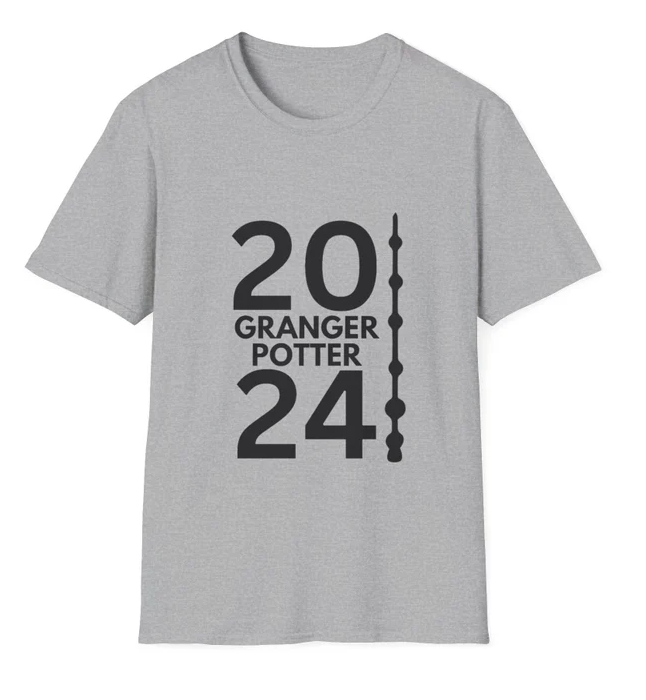
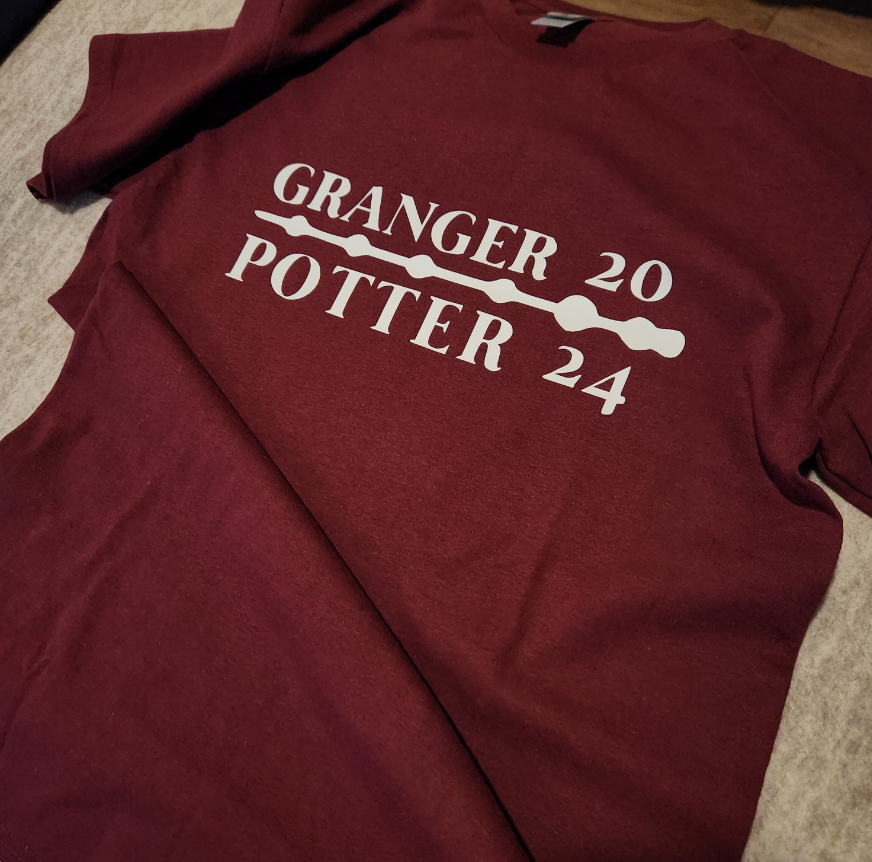
Granger-Potter 2024! Get Out the Vote!

I first saw a ‘Granger-Potter’ Presidential campaign shirt at a 2016 fantasy fan conference in Atlanta. Shirts, buttons, bumper stickers, posters, flyers — it was a big “merch” item at a remarkable meet-up of every fantasy lit, movie, and games franchise, in which Harry Potter was only one among many fan factions. I didn’t buy any because I foolishly assumed I could buy some tee-shirts and buttons anywhere.  I think I’ll order one or two of these shirts.

‘Granger-Potter’ was supplanted in 2020 after Rowling’s tweets heard ’round the world by an exclusively feminist ticket (Harry had been outed by a keynote speaker at that year’s ‘Harry Potter Conference’ as gay, black, and gender non-binary, but closeted…). You’ll note the Latin words for ‘Justice’ and ‘Equality’ in this campaign, which I guess was to suggest that, if we elected these British women — the Constitution places no restrictions on fictional characters who are not American citizens from running for higher office — that social justice and equal outcomes for all would be achieved with a flick and a swish.

I was delighted that ‘Granger-Potter’ has returned for the 2024 campaign season but I think I’ll be voting this year for the Jedi ticket.

May the Force be with us all in the coming month of electoral madness!

Tee-shirts available in all sizes and a variety of colors at Etsy.com.

Is Rowling ‘Spiritual not Religious’? The Historical Importance of 1692

In my correspondence with the friend for whom I wrote (in large part) last week’s “Is Rowling ‘Spiritual Not Religious’?,” I attached an essay about the choice Rowling made to place the pivotal moment in Wizarding World history in 1692. My point was that the choice seemed to reflect Rowling’s view that the fictional wizards and witches who went underground at that time were the real Christians, the Spiritual Seekers of the Radical Reformation or hermetic magi, who went underground in the real UK of that time consequent to the laws suppressing all non-conformist faith groups after the Glorious Revolution. That being the case, I tried to suggest, Rowling’s ‘spiritual not religious’ posture with respect to devotional church life was perfectly understandable.

My correspondent replied that this essay was new to her (it was published in the Smart Talks essay anthology that few people have read, alas) but that she had seen the YouTube video of the 2020 fandom conference talk I’d given on this subject. I had no idea that the event had been recorded and uploaded to that platform, but, sure enough, someone captured it on their phone and you can watch it above if you’re interested.

Some good news today, for which we thank God. Elizabeth Baird-Hardy, Deputy Headmistress of HogwartsProfessor.com and dear friend to Potter Pundits and Serious Strikers everywhere, wrote this evening to let us know that she and her family were well. They live way, way up in the mountains of western North Carolina, an area devastated by Hurricane Helen this week and, as the days passed without hearing from her, I was afraid their beautiful home, situated as it is on something like a cliff face, had been washed away. You can read her brief note after the jump — and please feel free to join the HogwartsProfessor faculty in prayers of thanksgiving for her family’s being spared and in petitionary prayers for all those still without homes, power, or clear roads. [Read more…]

Rowling’s ‘Critical Biography:’ Three Suggestions for Who Should Write It

The landmark event of what we are calling the Fourth Generation of Rowling Studies, in which the author’s life events are folded into an appreciation of her writing accomplishments will be the appearance of a ‘critical biography’ of merit that has this as its only purpose, that is, relating the subject’s life events and reading those works strictly within that context. See Brian Boyd’s magisterial two volume biography of Nabokov, Claire Tomalin’s lives of Dickens, Austen, and Wollstonecraft, and Lois Potter’s Shakespeare: A Critical Biography for examples of the defining work of this type.

Given the quality of her advisers and her own remarkable self-awareness, I think it can safely be assumed Rowling, Inc., has plans to take charge of her legacy now, lest a click-bait bio-critical narrative commissioned by her Genderist enemies today be set in stone until long after her death. Representing as her PR team does a personality famous for pre-emptive strikes that backfoot her opponents (a la Hermione in Order of the Phoenix), Fortress Rowling’s best move will be to authorize a critical biography, assuming one is not in progress already — one to which she generously contributes her open answers to questions and urges her heretofore silent friends and family to do the same — that sets the critical ‘Lake’ lenses through which all future readers will read her work. The authorized critical biographer, of course, will be expected to be more than sympathetic to and knowledgeable of Rowling’s views, experience, and artistry.

The trick? The best critical biographies are those written many, many years after the subject’s death. How will Team Rowling identify the best critical biographer today for a still-breathing literary figure? Which one will best be able to write about a living subject when the field has largely been one for literary historians? Here are my best guesses about how this could be done, seven guiding principles, and three suggestions for who should write Rowling’s authorized critical biography. All after the jump! [Read more…]