Is Rowling Silent Because of Lawsuit?

Yesterday Newsweek magazine posted a piece with the title, ‘JK Rowling Falls Silent as She Could Be Prosecuted in Imane Khelif Lawsuit.’ The lede was that Rowling’s absence from Twixter for ten days means she has been intimidated by a frivolous lawsuit with exactly zero chances of going anywhere into a cautious retreat lest she be punished for her feminist zeal.
As I pointed out earlier this week, it is much more likely that Rowling went on the tweeting tear that she has been on since late July in order to provoke this kind of counter-attack; as Julia Hartley-Brewer noted in The Mirror (UK), it cannot be cyber-bullying if Rowling was simply telling the truth — and a lawsuit, a serious one, would expose Khelif as a man and his women’s gold medal as fraud if it came to trial. The pictures of a man beating up a woman are so much more to the point than a man beating women in a bicycle race, swim meet, or weight-lifting contest that it is easy to see the world’s most successful story-teller grasping the potential of a court case to flip the narrative here.

But that’s not why Rowling has “fallen silent.”

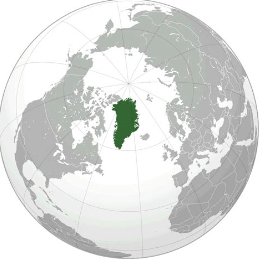
A friend who tracks Rowling’s yacht via its plotting signal (no, I don’t know what that is) reported this morning that the yacht has gone so far north up the eastern coast of Greenland that it has achieved unplottable status. I’m going to assume that, if the internet cannot track the Murray family boat as they sail toward the North Pole — end of Frankenstein, anyone? — then they do not have internet connections either as they approach a magnetic pole. The odds are good, if that is true, that she hasn’t heard anything about the kerfuffle her twixting blitz about Khelif has caused, whether those thirty-plus tweets were intentionally provocative or not.

Tomorrow, some thoughts on Rowling’s shed artistry, namely, when did she begin writing ‘rings-within-the-rings’ of her novels? My first guess is Order of the Phoenix but I think a closer look at specific chapters in early Harry Potter novels will reveal much tighter rings. See you then!
Rowling to Turn 60 on 31 July 2025; Where was She at 10, 20, 30, 40, 50?

If you number years of age as some traditional people do — considering the first year not as “zero years old” but as “one,” turning “two” at the beginning of the second year of life on what we celebrate as the first birthday — Joanne Rowling Murray entered her sixtieth year on 31 July, sailing on her yacht somewhere between Greenland and eastern Canada. She’ll turn 60 in conventional counting on 31 July 2025.

Turning 60 is not a very big deal in the US or UK but it is in the Far East for astrological reasons. Chinese astrology qualifies a year using both a ten year and twelve year cycle, which, taken together, mean that the quality of the birth year reappears only at the end of 60 year combined cycle:

Also named the sexagenary cycle or  the stem-branch cycle, the Chinese 60-year calendar cycle is based on the combinations of a cycle of ten heavenly stems and twelve earthly branches. Each year is named by a pair of one stem and one branch. The Year of Jia Zi (Jia from the heavenly stems and Zi from the earthly branches) is the beginning of the sexagenary cycle. The next Jia Zi Year will come 60 years later.

In Japan the 60th birthday is celebrated with special ceremonies, clothing, and food; the word for it, Kanreki, literally means “rebirth” because the celebrant is beginning again at his or her point of origin. I was living with a very successful Japanese man’s family in Massachusetts in May 1986 and the party on his birthday was something like what in the military is known as a “command call;” his students, business associates, publishers, family, and friends traveled from Japan, North and South America, and all of Europe to salute him. It’s a big deal.

Joanne Rowling was born in July 1965, a year qualified in Oriental astrology as ‘Yin Wood Si Ni Snake.’ The year beginning in February 2025 will have the same qualities. I suppose there are jokes about being a ‘wooden snake’ but as I was born in the year of the Yin Metal Ox, I’ll pass on throwing the first stone at her glass house.

I assume Rowling and the Murray clan will spend her birthday on their yacht floating off a beautiful beach or fjord as has become the family tradition. I thought today to review where Rowling was on her decade birthday celebrations to launch her Kanreki observances near the start of her sixtieth year. Thanks to the anonymous aggregator at The Rowling Library who put together their biographical timeline for The Presence; your efforts made this birthday compilation relatively easy.

Tenth Birthday — July 1975

Rowling’s family moved in 1974 to “Church Cottage, Tutshill, Gloucestershire, England. Rowling attends secondary school at Wyedean School and College” (TRL). Rowling at ten was living in an unhappy home. Casual Vacancy‘s Andrew Price and his painful relationships with his father Simon and mother Ruth is easily read as a transparency of the Rowling family as it was in Joanne’s teen years. [Read more…]

MinaLima Out as Potter Book Designers

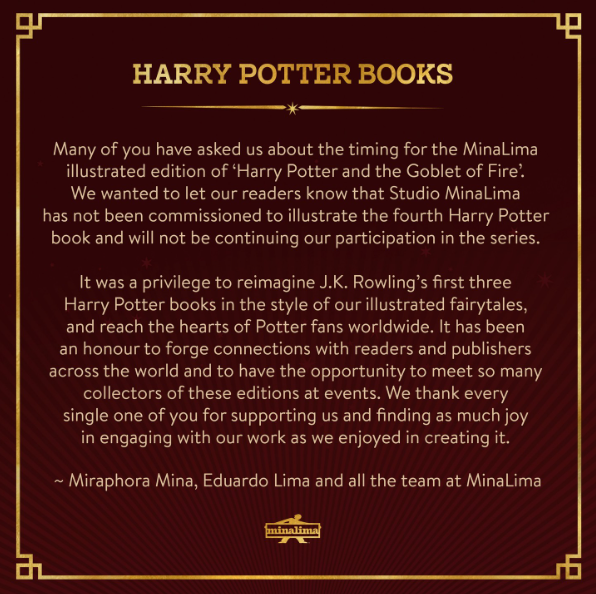
If there is a Harry Potter ‘look,’ it is the one created by MinaLima, the design and illustration team responsible for the Warner Brothers movie-adaptations’ graphic work (the Marauders’ Map!), the first two of the three Fantastic Beasts screenplays, as well as the first three volumes of the illustrated edition set of the seven Hogwarts Saga novels. Studio MinaLima announced via Instagram on 5 August that they would not be designing or illustrating the Goblet of Fire volume in this series.

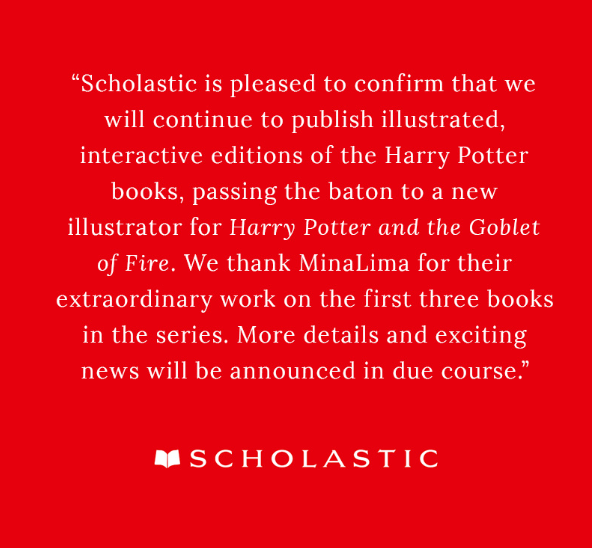
Scholastic confirmed this via The Rowling Library’s Instagram platform soon thereafter:

Judging from the responses to this news on Instagram, collectors and fans of the series as well as of MinaLima’s artistry are not at all happy with this decision. I scrolled down the first responses to The Rowling Library posting of this news and the reactions were uniformly expressions of disappointment, even disgust with Scholastic.

Why the change? The answer is almost certainly “money.” Either MinaLima asked for more than Scholastic was willing to pay or the books they designed were becoming too expensive to produce, which is to say, “too close to the ceiling price point readers will pay thereby reducing the profit made on each sale” or Scholastic just decided to go with a much less costly partner in this venture. As they have already done in another series — [Read more…]

Rowling to be Sued for Cyberbullying?

Last week I postedRowling Rages Against Olympic Women’s Boxing Debacle,‘ in which piece I reported on the author’s sixteen tweets between 30 July and 3 August on the subject of men being permitted to compete against women in the 2024 Olympic Games. See that article for the facts about these karyotype XY boxers, the pushback against Rowling’s  assertion that this is being allowed by a “misogynistic sporting establishment” rather than by an IOC cowed by feminists and their genderist offspring, and my thoughts about the relative importance of this story compared to the UK riots and incipient war between Iran and Israel.

Since I wrote that post, the Algerian and Taiwanese boxers won all their matches against biological women and were awarded gold medals. Rowling has tweeted and retweeted fifteen more times on this subject since 7 August; her only other three tweets in that time frame were one to condemn the UK riots targeting Muslim groups (nothing about those targeting “non Asian” populations or the causes of anti-Labour riots as well as the attacks on immigrants in the UK), one about the Islamist state’s abuse of women in Iraq, and another about those in Iran.

[Aside: again, nothing about the history of Islamist crimes against women in the United Kingdom or the context of the UK riots contra open immigration, making the irony and hypocrisy of her rioting post’s exclusivity that much more obvious. See ‘England Burning’ for the necessary historical perspective and typology of current populist protests in the US and UK that you won’t find in Rowling’s tweets.]

Regardless, Rowling has tweeted on the subject of men being able to beat up women in the 2024 Olympics more than thirty times since the end of July; thirty one out of thirty seven tweets and retweets have been on the Olympic boxing scandal or 84%. She hasn’t tweeted on the subject or any topic since 7 August.

Today this story took a predictable turn. One of the XY boxers, Imane Khelif, the Algerian who won a gold medal against XX competition, has initiated a law suit in France claiming that he has been the subject of “cyber bullying.” Rowling is said to be named among those accused of causing Khelif this harm. From the BBC report: [Read more…]

Alchemy as a Transformative Art; Rowling’s Asides about Draco Malfoy

I recently completed a draft chapter of a new book about Rowling’s ‘Shed’ artistry, the piece about her use of literary alchemy, the story version of metallurgical alchemy. This subtle but powerful adaptation and deployment of hermetic symbols, colors, and sequences is a parallel and complementary backdrop to the psychomachia or soul-transformation allegories of Rowling’s best works — and the key word there is “transformation.”

The key hurdle for readers trying to grasp this occult narrative tradition in English literature, from Chaucer and Shakespeare to Yeats and Joyce, Lewis, Williams, and Tolkien, is getting over their received opinion that metallurgical alchemy was the science of Medieval charlatans who pursued get-rich-quick schemes to make lead into gold and an “elixir of life” for immortality. That doesn’t translate to anything that makes sense in terms of story; “literary alchemy” if thought of as “story chemistry” as the modern laboratory science taught in secondary schools everywhere is a head-scratching non-starter. English and chemistry classes today have no common ground.

Traditional, which is to say ‘theocentric,’ alchemy, however, was primarily about the soul of the alchemical adept or seeker, a natural science working to the same end as the revealed spiritual path in which the alchemist lived (there were Muslim, Chinese, Jewish, as well as Christian alchemies). It was, in brief, one of the sacred sciences within the mosaic of said traditions arts and sciences, all of which pointed to the same end, namely, purification and transformation of the soul in hope of divinization in this life or after death.

Perennialists Titus Burckhardt and Seyyed Nasr, both of whom wrote about metallurgical alchemy, put great emphasis on this key point:

Alchemy may be called the art of the transmutations of the soul. In saying this I am not seeking to deny that alchemists also knew and practiced metallurgical procedures such as the purification and alloying of metals; their real work, however, for which all these procedures were merely the outward supports or ‘operational’ symbols, was the transmutation of the soul. The testimony of the alchemists on this point is unanimous. (Burckhardt 1972, 23)

Alchemy was certainly a way of enobling matter, hence its relation to sacred art. But this also means that alchemy is not just a prelude to chemistry, that it is a science of the soul in its relation to the cosmos and making use of external transformations for the sake of that inner transformation which is the ultimate goal of all the traditional sciences. (Nasr 1993, 107)

This is the shared goal of traditional sacred arts, most notably for our discussion of Rowling’s literary alchemy, in written story and staged drama. Through imaginative identification with the story hero or heroine on page or stage, the reader or audience member passes through the transformative and cathartic cycle of the alchemical work, break-down nigredo, purifying albedo, and restorative and illuminating rubedo. Just as the ‘hard darkness’ of lead becomes the ‘solid light’ of gold,’ so the metallurgical alchemist and sympathetic reader feels his soul enlightened by the logos light of the world that is at the heart of the solve et coagula process, “dissolve and recongeal,” shared by the story and laboratory traditions.

Rowling has never been asked about alchemy (!), though she has volunteered quite a bit about the importance of it to Harry Potter, claiming even that it sets the “magical parameters” of that series. Robert Terry, a long time friend of this weblog, pointed out to me recently, though, that, in her Pottermore piece about Draco Malfoy, she points directly to the key piece about metallurgical and hence literary alchemy, that it is not about manipulation of materials but the transformation of the soul for the better.

The Draco page at Pottermore is a delightful capsule review of Draco’s experience before, during, and after his years as a classmate at Hogwarts with Harry Potter, his nemesis. I enjoyed the slightly different but clarifying focus of seeing Draco’s life qua Malfoy, if there is very little new information about him in the story. The piece ends with an ‘Author’s Note,’ which suggests that the much longer summary of Draco’s life was written by Pottermore staff, perhaps from Rowling’s notes. Its psychological points about Draco’s remarkable Occlumency skills versus Harry’s inability to close his mind are invaluable, I think, for grasping Rowling’s thoughts about these two characters, the archetypal Gryffindor and Slytherine fire-and-water pair.

Robert Terry, though, wrote to me about what Rowling shared in her closing paragraphs, her ‘Author’s Note,’ for this piece, namely, new information about Draco Malfoy as a man in the years after his education at Hogwarts:

I imagine that Draco grew up to lead a modified version of his father’s existence; independently wealthy, without any need to work, Draco inhabits Malfoy Manor with his wife and son. I see in his hobbies further confirmation of his dual nature. The collection of Dark artefacts harks back to family history, even though he keeps them in glass cases and does not use them. However, his strange interest in alchemical manuscripts, from which he never attempts to make a Philosopher’s Stone, hints at a wish for something other than wealth, perhaps even the wish to be a better man. I have high hopes that he will raise Scorpius to be a much kinder and more tolerant Malfoy than he was in his own youth.

Draco had many surnames before I settled on ‘Malfoy’. At various times in the earliest drafts he is Smart, Spinks or Spungen. His Christian name comes from a constellation – the dragon – and yet his wand core is of unicorn.

This was symbolic. There is, after all – and at the risk of re-kindling unhealthy fantasies – some unextinguished good at the heart of Draco.

Three quick notes about that:

(1) The pointed aside, “perhaps even the wish to be a better man,” in opposition to “a wish for wealth” that Malfoy does not have, reveals Rowling’s understanding that alchemy is about the transformation of the alchemist’s soul for the “better.”

(2) Her discussion in these concluding paragraphs and the Pottermore review as a whole opens up the discussion of Draco’s journey also being alchemical, in parallel to Harry’s albeit from the opposite ends of the Wizarding World hierarchy of status and values. When she writes about Half Blood Prince Draco, “The ideas that Draco had about himself, and his place in the world, were disintegrating,” the nigredo quality of that year for him is in plain sight. His year apart in Deathly Hallows, even given his misplaced efforts in the Battle of Hogwarts, have albedo elements as well; his refusal to identify Harry at Malfoy Manor reflects his incipient chrysalis. Rowling’s author’s note about his adult study of alchemy, theoretical rather than metallurgical, I think is her saying that he recongealed after the Fiend Fyre nightmare of Hallows into a much better man.

(3) Rowling really doesn’t want the reader to neglect the “symbolic” nature of Draco’s life, hence her bald statement “This was symbolic” in reference to the unicorn hair core of his wand. As explained in How Harry Cast His Spell, the three wand cores favored by Ollivander are each symbols of Christ, the unicorn being the most well known of the three in English letters via the Medieval tapestry tradition. Magic ‘works’ in Rowling’s Wizarding World for the most part because of the interaction of the magical person’s spoken words, specific spells in an arcane language rather than common speech, and the Logos or Word core of a wand. Rowling in writing about “the unextinguished good at the heart of Draco,” by using the word “heart,” the spiritual center or noetic locus of the human person in most of the revealed traditions, in the context of his wand core may be making a larger point about the universality of good in each person however twisted their upbringing. The Light of the world, she might be saying, comes into the world within every man (cf. John 1:9), even the despicable Malfoy heir.

My thanks to Robert Terry for sharing this Pottermore article and its almost explicit statement by Rowling that she understands alchemy as a soul transformative art. The work speaks to that understanding but it is always a help for those who struggle with that idea to have the author’s testimony alongside the textual evidence.