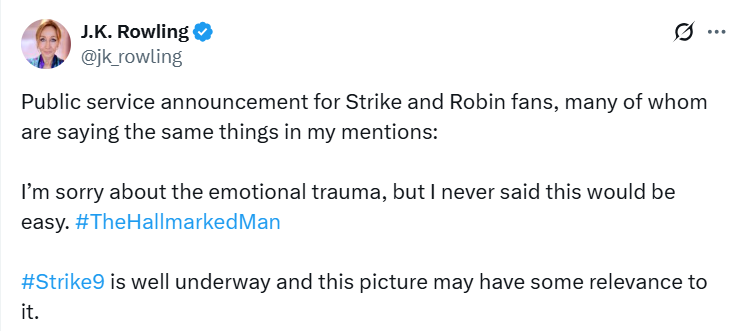
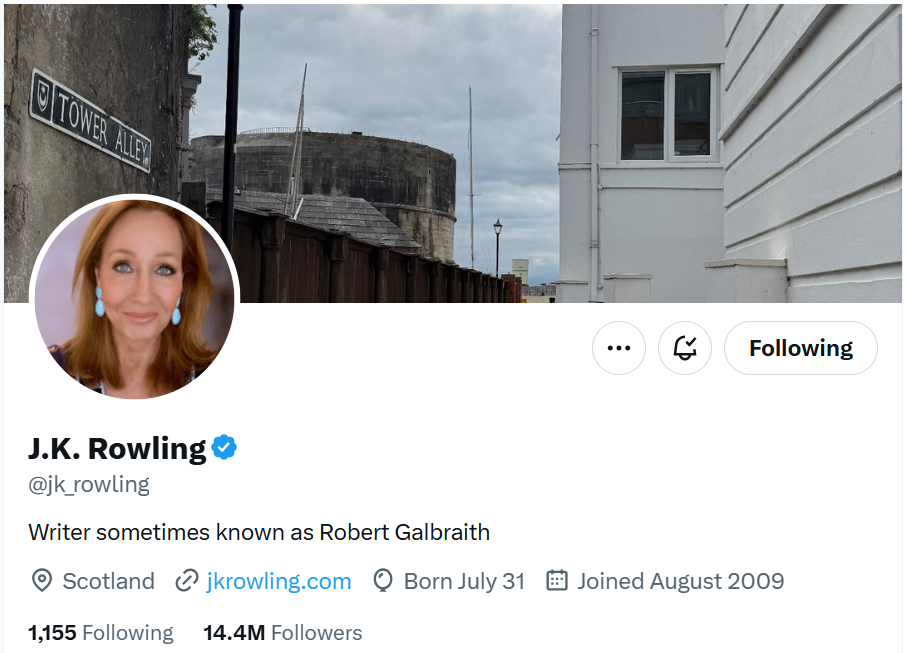
In a remarkable confirmation of the mythological analysis of the Strike-Ellacott series, J. K. Rowling has posted a “Public service announcement for Strike and Robin fans” frustrated by the “emotional trauma” created by The Hallmarked Man.


This painting is L’Amour et Psyché by William-Adolphe Bouguereau, painted in 1889. This oil on canvas painting depicts a scene from classical mythology, specifically the story of Cupid (Amour) and Psyche.
John Granger has argued since April 2021 that the myth of Cupid, and Psyche holds a “Mythological Key” to understanding the series; his first post and 2022 follow-up after the publication of Ink Black Heart are well worth re-reading in light of Rowling’s apparent confirmation.
A Mythological Key to Cormoran Strike? The Myth of Eros, Psyche, and Venus
Ink Black Heart: Strike as Zeus to Robin’s Leda and as Cupid to Mads’ Psyche
Cupid and Psyche, as handed down to us, is included in Metamorphoses (also called The Golden Ass), written in the 2nd century AD by Lucius Apuleius Madaurensis (or Platonicus). As John explained in Mythological Key, Rowling’s study of mythology at her Comprehensive school as well as in her undergraduate course in ‘Classics’ at the University of Exeter, in addition to her core beliefs about the soul and her reading in psychology (cf., A Jungian Reading of Troubled Blood), explains her use of myth in Harry Potter (Orestes) and Fantastic Beasts (Theseus and Hippolyta). Through the exegetical efforts of Joanne Gray and Evan Willis, readers at HogwartsProfessor have been well aware of the mythological foundation of Cormoran Strike in the myths of Castor and Pollux as well as Leda and the Swan since 2017.
Rowling’s morning tweet does not cite any of this exegetical work; it only strongly suggests via the 19th century painting of Cupid’s raising Psyche to the heights of Mt Olympus, the climax of this myth, that Strike and Robin will be ‘together forever’ at the finish of Strike9. That she chose this image to convey that message to “Strike and Robin fans” experiencing “emotional trauma” at the ending of Hallmarked Man, of course, rather than any other story’s happily-ever-after ending, while stopping short of confirming out right John’s work, brings that work immediately to mind for most Serious Strikers.
In a remarkable case of Jungian synchronicity, a HogwartsProfessor Substack video-post that was sent out this morning an hour before Rowling’s Cupid and Psyche themed tweet, Three Cheers for The Hallmarked Man! Thoughts After the First Reading, discussed the subject of how to deal with the frustration that many readers have with the ending with respect to the Strike-Ellacott relation-Ship. John’s answer to what Rowling called “emotional trauma” in her readership was that if a Strike fan reads and enters into the partners’ romance as an allegory of soul and spirit, the archetypal choice each soul must make between life with the body and the greater life of the Heart, the conflict reflected in the mythological Cupid and Psyche, she won’t feel that frustration. Mythology, with Literary Alchemy, Psychomachia, Christian Symbolism, and Ring Composition among others, is one of the the seven ‘Shed Tools’ that John has argued since 2002 Rowling-Galbraith uses in everything she writes.

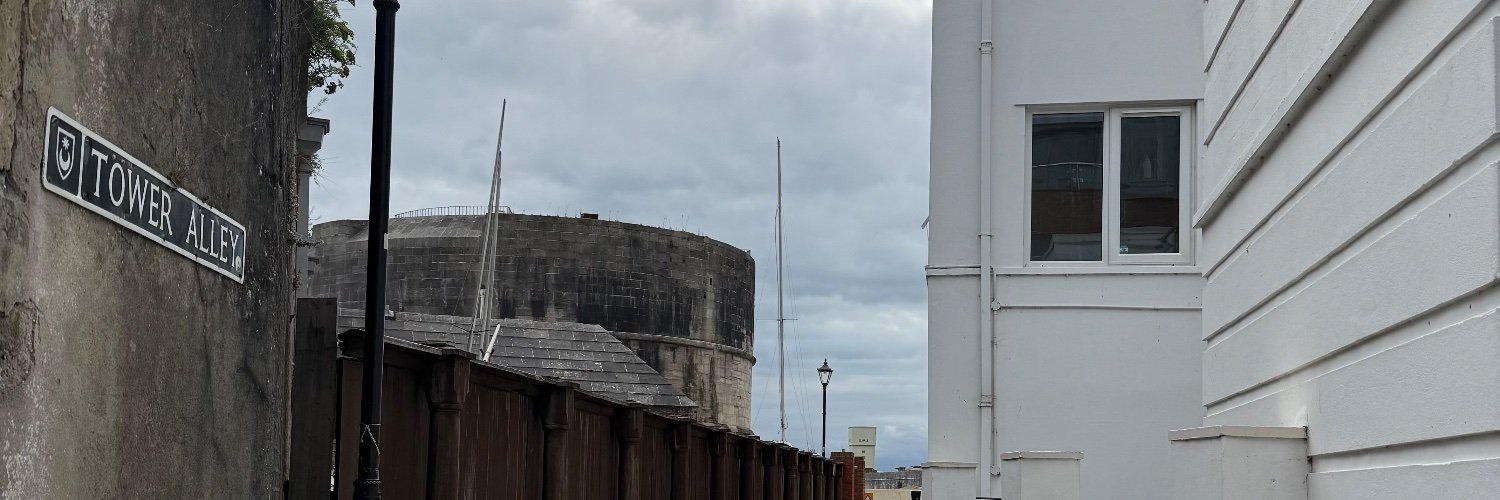
 J. K. Rowling has changed her Twitter (X) header and updated her profile picture with dramatic turquoise pendant earrings. The image is of Tower Alley situated at the the entrance to Portsmouth Harbour on the south coast of England, the UK’s largest naval base. The tower in the background is Round Tower. Built on the orders of King Henry V in 1418, it originally housed a defensive chain that could be raised to protect the harbour from enemy shipping. I can’t find an exact match for this photograph online, so it is likely that this is her own creation, and she has physically scouted this location for the next Strike book.
 Although most fans are still digesting the wonderfully complex plot of The Hallmarked Man, J. K. Rowling has recently reiterated that her headers are usually clues to future books, it is probably a good time to remind ourselves of the headers most likely to refer to Strike 9. With The Hallmarked Man carrying themes of pregnancy, childbirth and babies, the images of a tree-house and scattered dolls, might mean a childhood theme for the next in the series.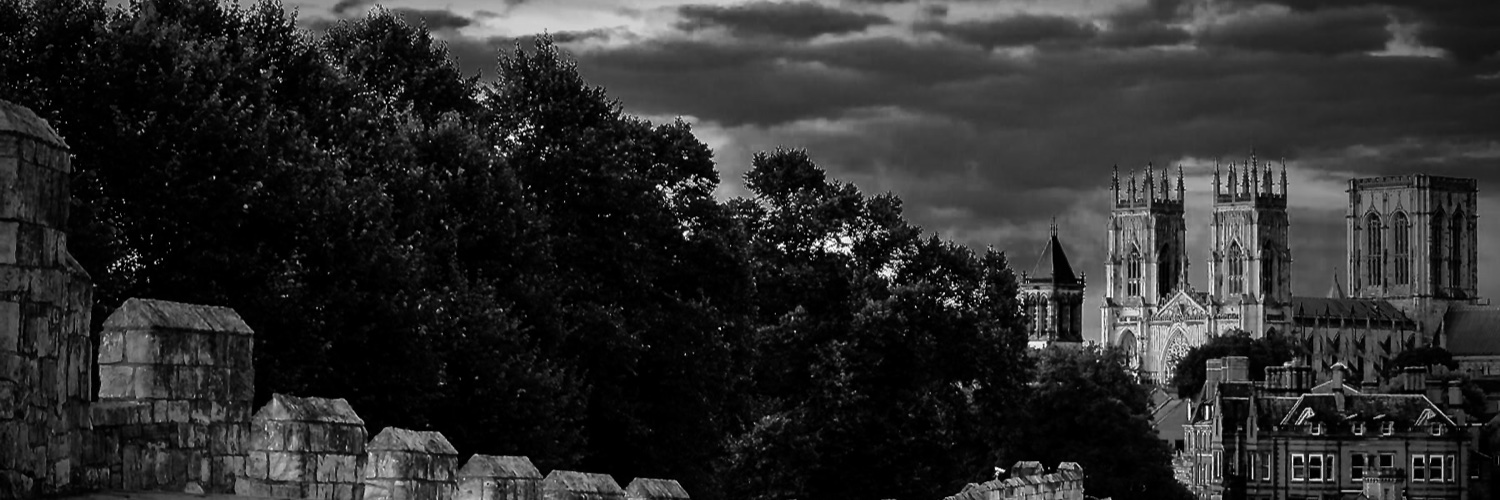


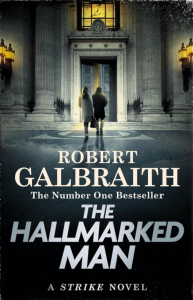 A thirteen chapter preview is available for the lastest Robert Galbraith novel, The Hallmarked Man. This is a copy of the North American edition from Mulholland and the preview is available on the French website Decitre.fr, and is likely to be an error, so for the curious, check it out soon:
 Having just finished the month-long Lake and Shed celebration of J. K. Rowling’s opera omnia, my dominant feeling is one of pride. Recording somewhat over 31 hours of video, mastering (or at least becoming competent) in video editing for the intro and getting to grips with the technicalities of rendering and uploading the content to Substack and You Tube, all within a month, was a challenge that I wasn’t sure I could pull off. Twenty-five episodes were dedicated to individual works of Rowling, and in each episode only a single example of lake inspiration or shed artistry was explored. The mine is so rich that we could easily produce another hundred and twenty-five episodes and still not exhaust what J. K. Rowling has achieved.