The Hidden Cellar Beneath J. K. Rowling’s Childhood Home
Church Cottage in Tutshill, near Chepstow on the England-Wales border, is best known as the childhood home of J.K. Rowling. The modest Victorian building, later a private residence, briefly returned to the public eye in 2012 when it was put up for sale. Estate agents’ photographs and descriptions highlighted two curiosities that caught the attention of fans and newspapers: graffiti left by a young Jo Rowling in her old bedroom (“Joe Rowling slept here circa 1989,” or words to that effect), and an opening in the floor of the dining room that was widely described as a trap door.

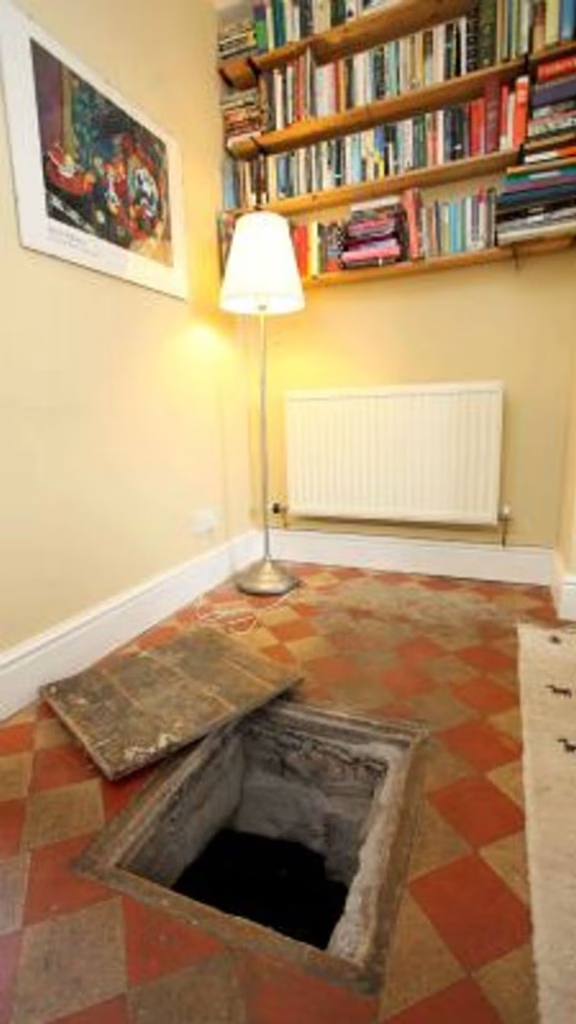
That “trap door” is more accurately an access hatch. Photographs from the 2012 particulars show a Victorian tiled floor—square quarry tiles laid in a diamond pattern of alternating red and beige—with a rectangular section of flooring lifted aside to reveal a dark rectangular opening. Strictly speaking it is not a hinged trap door; it is a removable slab or framed cover over a hole in the ground, closer in appearance to a heavy access lid than the dramatic hinged doors of fiction.

A surveyor’s report prepared in connection with the building’s listed status and subsequent works supplies the precise details. The dining-room floor sits on a solid base of the patterned quarry tiles. Beneath it lies a full-sized cellar occupying the entire footprint of the room. The ceiling of this cellar is vaulted in brick, forming an arched structure that carries the weight of the floor above. The access hatch is positioned at the tallest point of the vault. Far from being a cramped storage pit, the space is substantial—room-sized rather than cupboard-sized.

Floor: Square quarry floor tiles on solid floor. Diamond pattern, with alternating red and beige tiles. This floor is formed by the brickwork vaulted ceiling of the cellar, the cellar access hatch is located in this room.

Report on the Condition of Church Cottage. March 2017

Church Cottage was erected in 1852 as a Church of England schoolhouse for Tutshill, predating the church with which it is associated. Why would a mid-nineteenth-century rural school need a large vaulted brick chamber under its floor? My initial, attractive guess was that the hatch covered a cool store for the daily half-pint of milk once issued to British schoolchildren. The dimensions of the opening seemed roughly suitable, and anyone who remembers the warm, faintly unappetising milk of mid-twentieth-century primary schools can appreciate the appeal of a cool underground box. That theory does not survive closer examination, given the evidence we have now for the size of this room.

Vaulted brick cellars of this type are a recognised feature of larger Victorian houses in hard-water districts. They were commonly constructed beneath sculleries and functioned as cisterns. Rainwater collected from the roof was directed into the sealed underground chamber, providing a supply of soft water free of the dissolved minerals that made soap almost useless. In a school serving dozens of children, why would the building need a rainwater cistern?

The timing is significant. Britain in the late 1840s was still reeling from cholera epidemics that had swept through its towns and cities. The Public Health Act of 1848 created local boards charged with improving sanitation and water supply. In densely populated urban areas, mains water and sewers began to appear. In a rural parish such as Tutshill, mains water was impractical. Sinking a conventional well on the same small plot as latrines for forty children carried obvious risks of contamination. Collecting roof water into a purpose-built, lime-plastered (and possibly metal-lined) cistern offered a contemporary solution that aligned with the new public-health priorities. The chamber would have been kept partially full, with an overflow arrangement to prevent flooding and a lead pipe rising to a hand pump for drawing water.

Later Victorian school buildings abandoned the arrangement; roof water contaminated by bird droppings was never ideal, especially so close to the coast. By Rowling’s childhood the cistern had long ceased to function as a water store. The surveyor’s report does not mention standing water, and in a modern house an impermeable underground tank of stagnant water would be undesirable. The structure is therefore likely to be damp rather than flooded, the original waterproof lime rendering no longer fully intact.

The feature remains a quiet reminder of the building’s origins. What estate agents once billed as a romantic trap door is in fact a mid-Victorian public-health engineering solution: a vaulted brick rainwater cistern that once lay dark and wet beneath the feet of Tutshill’s schoolchildren, and later beneath the dining table of the family that included a future novelist. The hatch in the tiled floor is still there—an unassuming rectangular interruption in the pattern, opening onto a surprisingly generous arched chamber whose original purpose had been forgotten until the surveyor’s measured description brought it back into view.

Pre-renovation elevation and plans. More after jump —

[Read more…]

HBO’s Harry Potter and the Alchemical Symbols

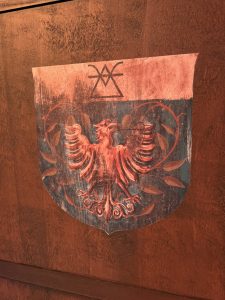
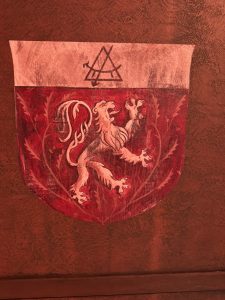
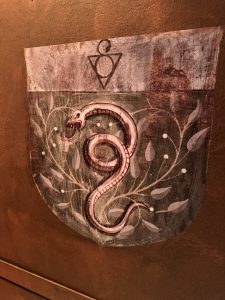
This week, HogPro all-pro Suzanna Schwartz pointed my direction to the house crests displayed at the franchises Back to Hogwarts event in London. These were exciting for two reasons. Finally, us Ravenclaws have our eagle and house colours returned to us and each shield had an arcane and mysterious symbol added to the top.

Suzanna points out that the base of each symbol relates to the elements of earth, air fire and water.

Western alchemy makes use of the four classical elements. The symbols used for these are:

  • Air 🜁 ()
  • Earth 🜃 ()
  • Fire 🜂 ()
  • Water 🜄 ()

Wikipedia

In Hufflepuff’s symbol there is a clear cup above the earth sign, and two bars at an angle that might be taken for elements of the letter H.

To the top of Ravenclaw’s air symbol is a curved V that could be a stylised diadem and elements of the letter R sideways.

Gryffindor’s fire sign has what looks to be a sword, but try as I might, I cannot make that rocking horse look like a G.

Slytherin’s symbol is much easier to decipher forming at the same time, a ring a capital S and a snake.

Let me know in the comments below what your interpretations of these signs might be.

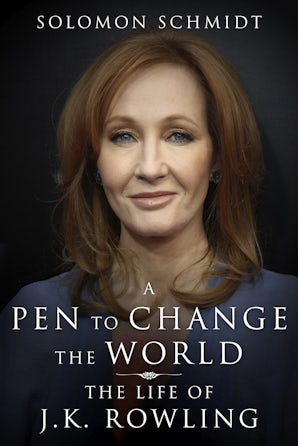
A Pen to Change the World – the Biography of J. K. Rowling by Solomon Schmidt.

A Pen to Change the WorldA new biography of J. K. Rowling is badly needed. J.K. Rowling: A Biography by Sean Smith provides an accessible, heavily detailed, but structurally simplistic look at the author’s meteorological rise. First published in 2001, Sean Smith’s unauthorized account focuses deeply on the trials and tribulations Rowling faced before finding global success with Harry Potter. Because his work functions as a time capsule from the very beginning of her career, it misses more than two decades of monumental shifts in her professional and personal life.
My copy of Smith’s book bears the dents and battle scars of being hurled across the room when the reference I’m looking for proves to be missing or inaccurate. There are some howlers such as the lower second class honours that Rowling gained at Exeter are translated into an incomprehensible (for British readers) 2.2 Grade Point Average, and Rowling’s parents being posted to a Commando base at Arbroath (as it is now), not the Royal Naval Air Station technical training base (as it was then).

As John Granger pointed out when the new biography by Solomon Schmidt was announced, he is very young, and his publisher seems to specialise in controversial books by, among others, Woody Allen, Robert F. Kennedy Jr., Ted Cruz and Rand Paul. This lefty socialist was not filled with confidence. Although Mr Schmidt sent me a very polite mail, I didn’t engage with him.

My reticence seemed to be confirmed when stories were placed in the gutter press to drum up publicity for the new book:

National Enquirer: J. K. Rowling’s Dad Sold Signed ‘Harry Potter’ Copy After She ‘Told Him to Go Pound Sand’

New York Post: JK Rowling’s father ‘ran illegal cannabis operation’ from secret cellar in house

In the later article Rowling’s cousin Ben is quoted as saying “When Pete was visiting me at one point in 1997, he told me that over the previous few years, he had been one of the largest growers of marijuana in South West England and Wales”. As someone who was a young man in Wales in 1997, I can confirm you would need a fair size farm to be one of the largest growers in the South West, not a few square feet of cold store designed to keep milk cool, when Church Cottage was a schoolhouse.

My worst fears seemingly confirmed, I was surprised when Solomon offered me a copy to review ahead of the publication at the end of June. The copy was electronic so I couldn’t even have the satisfaction of hurling it across the room…

In order to give A Pen to Change the World a fair review, I gave myself the following criteria, any one of which would be a valuable addition to the Rowling literature. If it fails all three tests, then save your money:

  1. A synthesis of all the available information we have about Rowling’s life brought up to the present date. This needs to be impartial, its okay to be sceptical and even critical, as long as the sources are presented fairly. This doesn’t need to be absolutely complete (impossible in a single volume), but should at least give a fair representation of what we know.
  2. Present new information, impeccably sourced, to known (not anonymous) people who’s lives have intersected with J.K. Rowling.
  3. Work as a piece of literature. The life of J. K. Rowling is extraordinary. If that life can be presented in an engaging way, and be a joy to read, without ‘fictionalising’ her life, this would still be a valuable book even if the above goals can’t be met.

A Synthesis of all the Available Information

A Pen to Change the World is wonderfully comprehensive, with material that has been made available after the Smith biography, woven cleverly into the narrative both pre and post Potter. All of the sources are included in an appendix of some 91 pages and referenced to each line and page of the biography. Solomon did not need to do this; most writers would have been happy with the five-page bibliography and links to extensive article and AV citations. What this does provide is an invaluable tool for researchers. A source list presented in a chronology of J. K. Rowling’s life, that will save very much time for anyone interested in looking for biographical reflections in Rowling’s works.

There are some surprising omissions. The astrological duo Starsky and Cox, that J. K. met and befriended during her year in Paris do not get a mention. But these are very few and far between, and I do bear in mind that the Hogwarts Professor interest in Rowling’s astrology might be somewhat niche.

It is Solomon’s credit that I could tell from the text what his politics biases might be. As a social minded liberal, what in the UK is called a centrist, in the later chapters there are parts of the biography I found troubling. I feel confident that would be true for everyone, no matter their political persuasion, because wherever a conflict is discussed, the author has presented both sides neutrally, and in the protagonist’s own voice.

***** Neutral, comprehensive and excellently sourced.

Present New Information

Although the biography is unauthorised by J. K. Rowling herself, Solomon Schmidt has gained access to some well-known names in Rowling’s life: Jorge Arantes, Barry Cunningham (the publisher who signed J. K. Rowling to Bloomsbury), Steve Eddy (Rowling’s English teacher), Ben Rowling and Bryony Rowling.

The revelations published in the press, at the time of writing, have come from the last two. Ben and Bryony are her American cousins, and their stories seem to be presented honestly. Where there are discrepancies with the possible (I’m wording this delicately) this could be due to the fanciful reminiscences of childhood or the hyperbole of Peter over a few drinks. I find it likely that Peter did grow marijuana, but it would only be enough for home consumption (perhaps initially to alleviate Anne’s symptoms of MS) and perhaps for a few friends in the Pub.

For students of J. K. Rowling’s lake there are a few more revelations that I have agreed not to mention prior to publication, but I eagerly look forward to discussing after that time.

**** New information has been published, and while I don’t think there is anything there to set the world on fire, Solomon is to be congratulated for finding what he has.

Work as a piece of literature.

This book is beautifully written. For the first few chapters I tried to keep track of the source material by keeping the book open to the appendix on one table while reading the text with another but abandoned this to concentrate on the story. The prose complements the shades of light and dark without being overly intrusive. A few times Solomon inserts some sentences to evoke the time and place without it appearing padded. In fact, the straightforward style can appear sparse at times but helps what is a very complex life clip along at pace. Uniquely, this biography has made it to my to-be-re-read list and not just as a reference volume.

***** A wonderfully written story, that works as a very immersive read.

Conclusion *****

I have no hesitation in recommending this book to any Rowling fans and scholars. In fact, I would recommend this book to anyone who enjoys a good story well told. The importance of A Pen to Change the World to future scholars is thanks to its voluminous citations, new references to never before documented interviews and scrupulous impartiality. The reason for it to likely enjoy widespread popularity will be down to J. K. Rowling being one of the centuries great lives. It is a life that deserves a biography of the standard of Solomon Schmidt. 5/5 Stars

Finding Harry – A Behind the Scenes Look at the HBO Series

Watch Finding Harry: The Craft Behind the Magic | HBO Max

After announcing the Harry Potter series Christmas screen date on the Annunciation, HBO has just gifted fans with a delightful Easter treat: Finding Harry: The Craft Behind the Magic, a brand-new behind-the-scenes special that streamed on Max starting April 5, 2026, and aired on HBO the same evening. Narrated by Nick Frost (who steps into the role of Hagrid in the upcoming series), this roughly 25-minute documentary offers an intimate, artist-driven peek into the making of HBO’s highly anticipated Harry Potter. Far from a standard promotional fluff piece, Finding Harry focuses on the meticulous craftsmanship that’s going into re-imagining J.K. Rowling’s beloved wizarding world for a new generation. Fans of the Warner Bros film adaptations will be reassured by the vast set creations and animatronics that promises a minimum of CGI – a hallmark of the original series of films. I was impressed by how subtly different those sets were, this will help those of us whose imaginations struggle to free themselves from the original films. The special shines a light on the dedicated teams behind casting, production design, costumes, and creature effects—highlighting the “epic scale and meticulous care” involved in bringing Hogwarts and its inhabitants to life once again, 25 years after the original films began enchanting audiences.

One of the most charming segments dives into the extensive search for the new trio: young actors Dominic McLaughlin (Harry Potter), Alistair Stout (Ron Weasley), and Arabella Stanton (Hermione Granger). If you have listened to the first three Harry Potter Full Cast Audio books, Arabella’s wonderful performance as Hermione will already be familiar to you. Through heartfelt interviews with casting directors and the young stars themselves, viewers get a sense of the magic (and pressure) of finding the perfect fits who can carry forward such iconic roles. The special also features insights from key cast members including John Lithgow, Paapa Essiedu, and Janet McTeer, alongside the craftspeople whose invisible work—sets, wands, robes, and magical creatures—will make the series feel both fresh and faithful.

What stands out most is the tone: warm, reverent, and genuinely enthusiastic. It celebrates the “awe-inspiring commitment to detail” without spoiling major plot points or visual effects. Instead, it lets the artists speak for themselves about the joy and challenge of translating the books’ wonder onto the screen in a longer, more serialised format.For longtime Potterheads and newcomers alike, Finding Harry serves as the perfect appetiser. It builds excitement for the full series while reminding us why this world continues to captivate: it’s not just about spells and Quidditch—it’s about the extraordinary people (and creatures) who bring the ordinary to life with heart, imagination, and painstaking effort. Expect more deep dives and teases as we head toward that Christmas 2026 premiere!


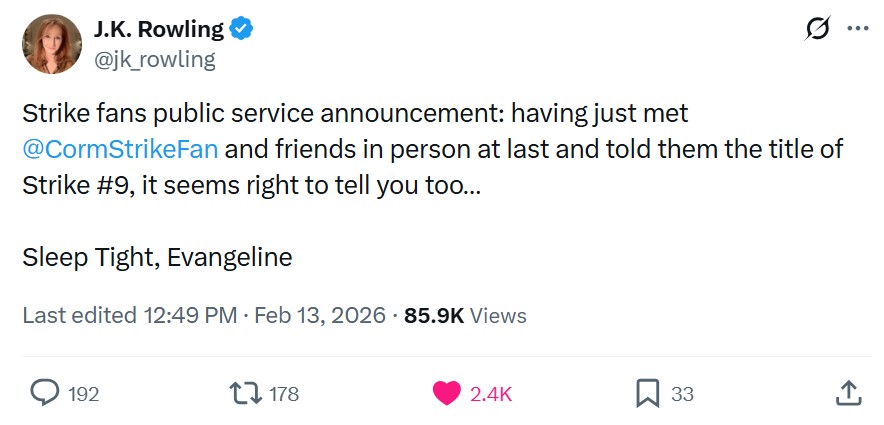
Sleep Tight, Evangeline – Title Release for Strike 9

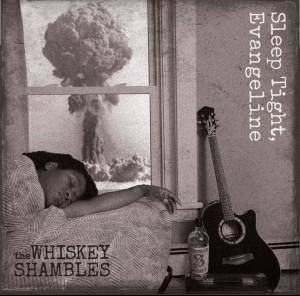
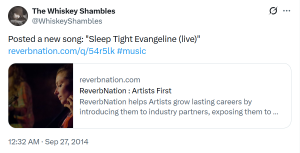
As a wonderful surprise for Friday the 13th, not only has J. K. Rowling met the team from StrikeFans.com, she has shared with both them and now us, the title of Strike 9 – Sleep Tight, Evangeline. A quick google search reveals that this is the title of song and album from Whiskey Shambles, who are described as “pitch dark ultra-blues” and “RL Burnside and Black Sabbath jamming with Nina Simone in a burned-out rum shack…”

The Whiskey Shambles refuse to accept the constraints of the narrow opinions of how a blues band should sound. Their prime objective is to steal your heart, melt your face, and make you feel alive. With backgrounds steeped in the traditions of the Delta to the hallowed opera stage, they are just as likely to call up the darkness with a murder ballad as they are to take you to church.

 The lyrics for the tune and a Whiskey Shambles performance:


I live the closest dreams, when I’m lying broken, and done for.

I live the closest dreams, when I’m dying, choking, and dead for . . .

Sleep tight, Evangeline. I’ll see you in my dreams

When I’m lying broken, and done for.

Sleep tight, Evangeline. I’ll be there in your dream

when I’m dying, choking, and dead for you.

The trademark for “Sleep Tight, Evangeline” was registered in 2023 (almost certainly by a J. K. Rowling cut-out) and the album was released in November 2025, which makes this album an unlikely source for the book title, but…

The band are followed by J. K. Rowling on Twitter, and they have been playing the song Sleep Tight, Evangeline, at least since 2014. It seems possible, and I would argue likely, that permission was sought and gained from Whiskey Shambles to use the title in 2023. The band, realising the huge publicity potential, releases an album with that title in 2025 prior to the book release, their first album in more than ten years.

Other Likely Inspirations for the Title

The Longfellow Poem:

John Granger found that: The name Evangeline was first popularised in the 19th century by the poem “Evangeline: A Tale of Acadie” written by Henry Wadsworth Longfellow. The poem tells the story of a young woman named Evangeline who is separated from her true love during the forced deportation of the Acadians from Nova Scotia. The poem was incredibly popular in its time and helped to establish the name Evangeline as a classic and romantic choice for baby girls.

Musical Inspiration:

Evangeline is most famous in popular music as a song by The Band.

Emmy Lou Harris recorded the song and titled the album Evangeline.