J. K. Rowling Drops All the Strike 9 Clues for Christmas!
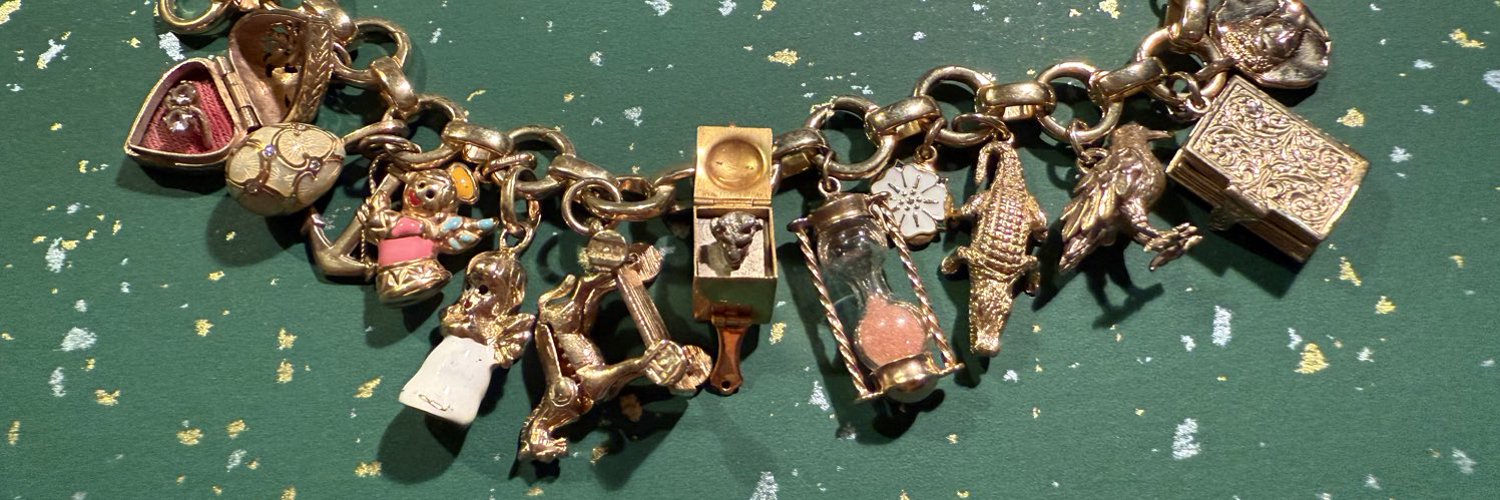
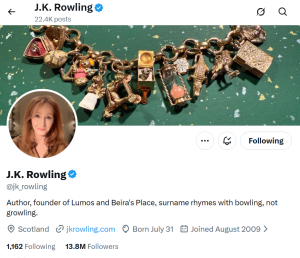 J. K. Rowling has consistently used the headers to her Twitter (X) account to drop clues to the books she has been working on. You can find all of her previous Twitter headers here. As a special early Christmas present to Strike fans, she has changed her header to a charm bracelet filled with clues for the upcoming ninth in the Strike-Ellacott series. Each of the charms on the bracelet are discussed below:
Link 1
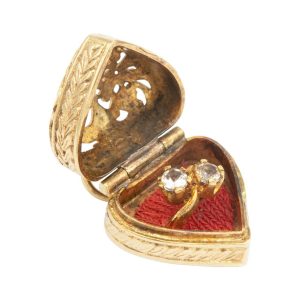 A diamond ring in a heart shaped box. Described by Robert Harris Jewellers as “An attractive vintage 9 carat gold ring box charm. This splendid little charm has a gorgeous heart shaped filigree lid, opening to display a pretty two stone ring. A lovely and interesting item dating to 1966.”
This could be “the silver-coloured band hidden in the depths of Murphy’s wardrobe: a tiny, sparkling shackle.” However this is not a solitaire and the band is gold rather than silver. Could this be a ring from another suitor?
Link 2
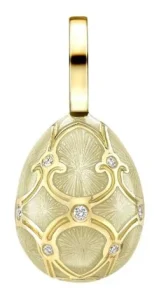 A diamond encrusted and enamelled gold egg. This egg is from Fabergé, and is by some distance the most expensive item on the bracelet, retailing at $9,770.
The egg is a universal symbol of creation, rebirth, fertility, and potential. Its ability to contain and birth new life makes it a powerful symbol of renewal, growth, and the afterlife, found in spring rituals and Christian Easter celebrations. Robin’s ectopic pregnancy in The Hallmarked Man was a surprise to all except John Granger. This may represent her difficult decision to freeze her eggs to maintain fertility.
A golden anchor. Anchor symbolism primarily represents safety, stability, hope, strength, and steadfastness, stemming from its nautical function of holding a ship secure; it also signifies strong ties, commitment, and love, especially in relationships, and holds deep roots in Christianity as hope in Christ, often appearing in catacombs as a hidden symbol of faith during persecution. Paired with the egg, this could represent Cormoran Strike’s support for Robin.
 Link 3
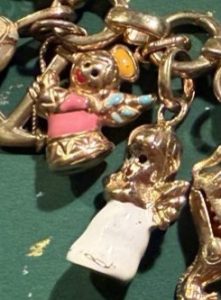
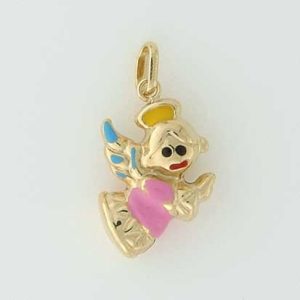
Possibly Cupid and Psyche, but these figures aren’t very distinct. Twitter user, hsmum has brilliantly identified the Hattern Garden jeweller where the pink Angel was purchased.
Link 4
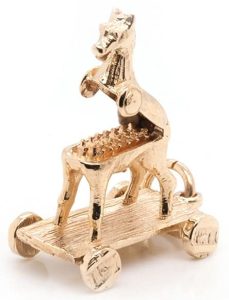 A Trojan horse. This one looks to be sourced from Ogden a jeweller in Harrogate. They say: “Expertly crafted from high-quality 9ct gold, this charm is designed to open, revealing intricate details inside, adding an element of surprise and intrigue. A symbol of cunning and strategy, the Trojan Horse makes a bold statement while offering a delightful, interactive experience.”
This reader is hoping that Strike reflects on the success of his ‘cunning and strategy’ in Hallmarked Man, and tries another tactic.
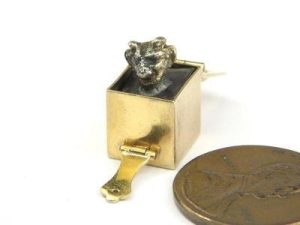 Link 5
A Jack-in-a-box. Badly-Wired-Lamp identified this on Twitter, and Worth Point describe this as “A terrific vintage English, solid 9 carat gold charm; beautifully modelled as a jack in the box type toy, with a catch-release revealing a tiny silver horned devil inside on a spring!”
A Jack-in-a-box is the archetypal surprise, and it is certain that Strike 9 will contain its share of surprises.
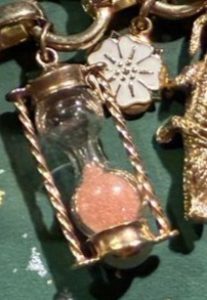 Link 6
A hourglass. Time may be running out! A similar one is available at Butter Lane Antiques who say: “The hourglass (aka sand timer), along with it’s obvious practical uses, has long been associated with death – particularly the brevity of individual human existence. Often found on grave stones from the middle ages through to the Victorian era, occasionally with the words Fugit Hora (Latin: ‘Hours are Fleeting’ or ‘Time Flies’). This miniature hourglass pendant dates from the late Victorian era, and, while it does measure out a length of time (approx. 3 seconds), it was likely intended as a symbolic Memento Mori piece more than anything else.”
 Link 7
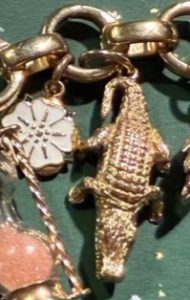
The white rose of Yorkshire. Robin Ellacott’s home county. White roses symbolise purity, innocence, new beginnings, and reverence, making them popular for weddings (new union), funerals (remembrance, peace), and as tokens of loyalty, respect, and honour, representing a pure, untainted love or deep admiration. They signify fresh starts, quiet love, spiritual connections, and are a timeless way to express deep emotions from joy to sorrow.
A crocodile or alligator. A crocodile may symbolise power, survival, resilience, and primal energy, but also cunning, deceit, and danger.
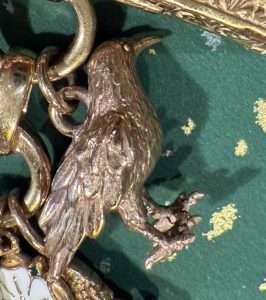 Link 8
A golden corvid. A crow or raven. I really wanted this to be a chough to symbolise Cornwall, but the beak looks too thick. As Badly-Wired-Lamp pointed out, Strike has a close encounter with a raven in The Running Grave: “A loud bang made Strike start. A bird had hit the office window. For two seconds, he and the raven blinked at each other and then, in a blur of black feathers, it had gone.”
 Link 9
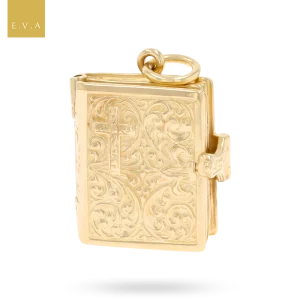
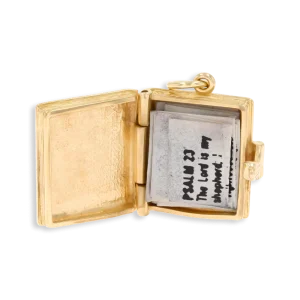
A psalter. J. K. Rowling herself has identified this as: “The book is a psalm book and holds real, miniature psalms.” I can find three of these for sale recently. Two were empty and this one has Psalm 23. I can find other designs with the commandments and the lords prayer.
23 The Lord is my shepherd; I shall not want.
2 He maketh me to lie down in green pastures: he leadeth me beside the still waters.
3 He restoreth my soul: he leadeth me in the paths of righteousness for his name’s sake.
4 Yea, though I walk through the valley of the shadow of death, I will fear no evil: for thou art with me; thy rod and thy staff they comfort me.
5 Thou preparest a table before me in the presence of mine enemies: thou anointest my head with oil; my cup runneth over.
6 Surely goodness and mercy shall follow me all the days of my life: and I will dwell in the house of the Lord for ever.
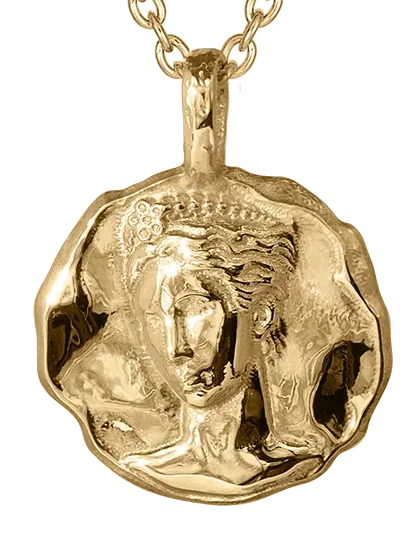
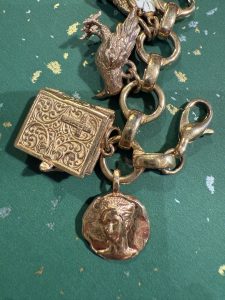 The head of Persephone. Rowling helpfully provided us another view of this charm to help us identify it. This one is sold as a necklace by Common Era. Persephone plays a crucial role in Psyche’s final trial: obtaining a box of her beauty from the underworld to appease Aphrodite. We know already that the myth of Cupid and Psyche will form the framework for the upcoming books, and Psyche in Hades will certainly need psalm 23!
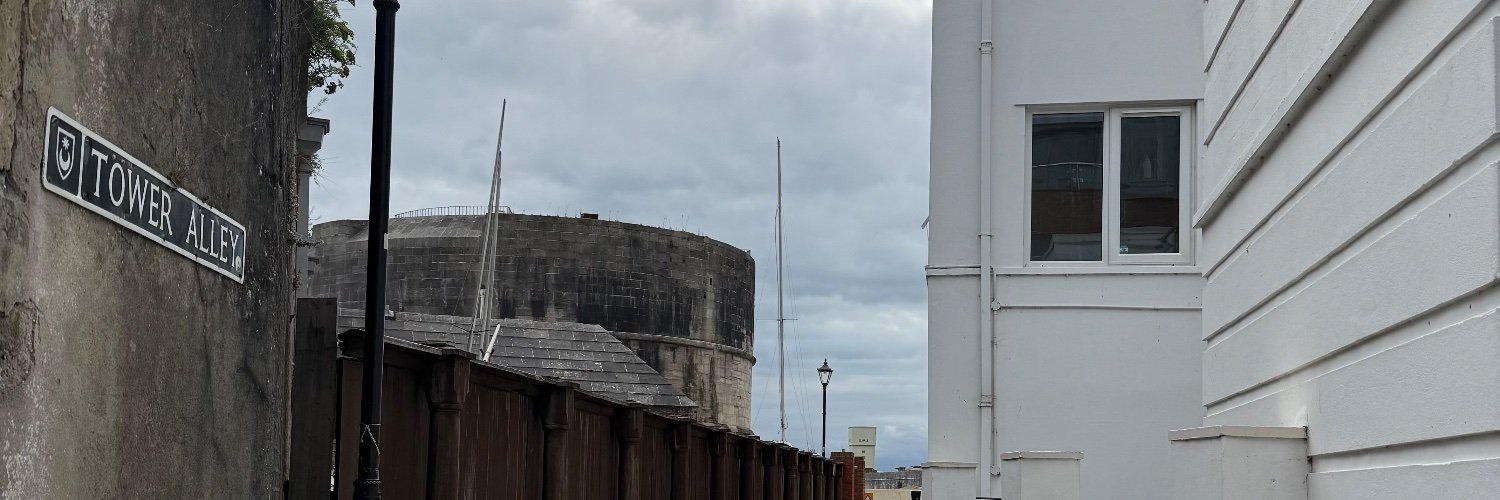
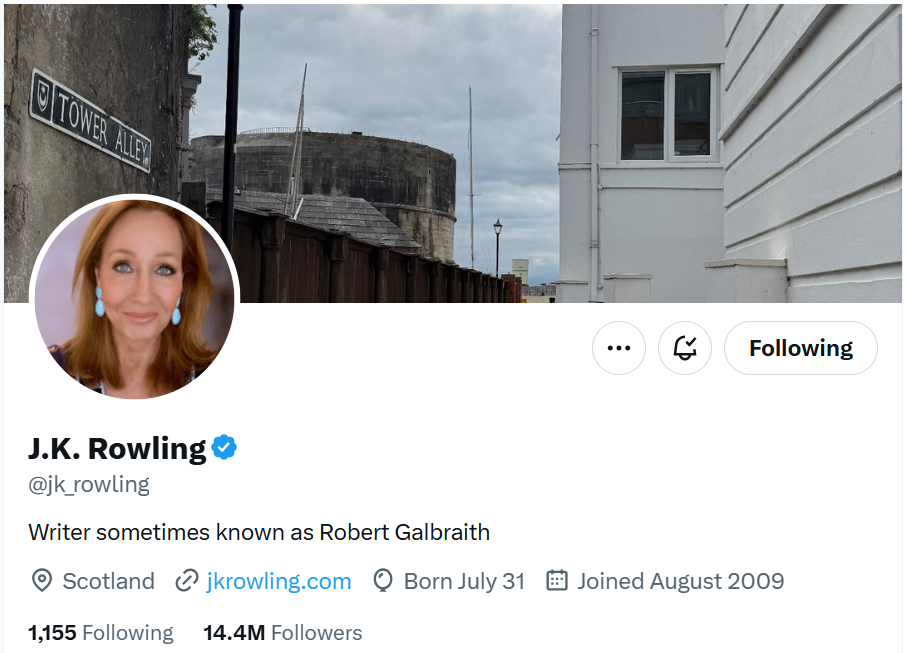 J. K. Rowling has changed her Twitter (X) header and updated her profile picture with dramatic turquoise pendant earrings. The image is of Tower Alley situated at the the entrance to Portsmouth Harbour on the south coast of England, the UK’s largest naval base. The tower in the background is
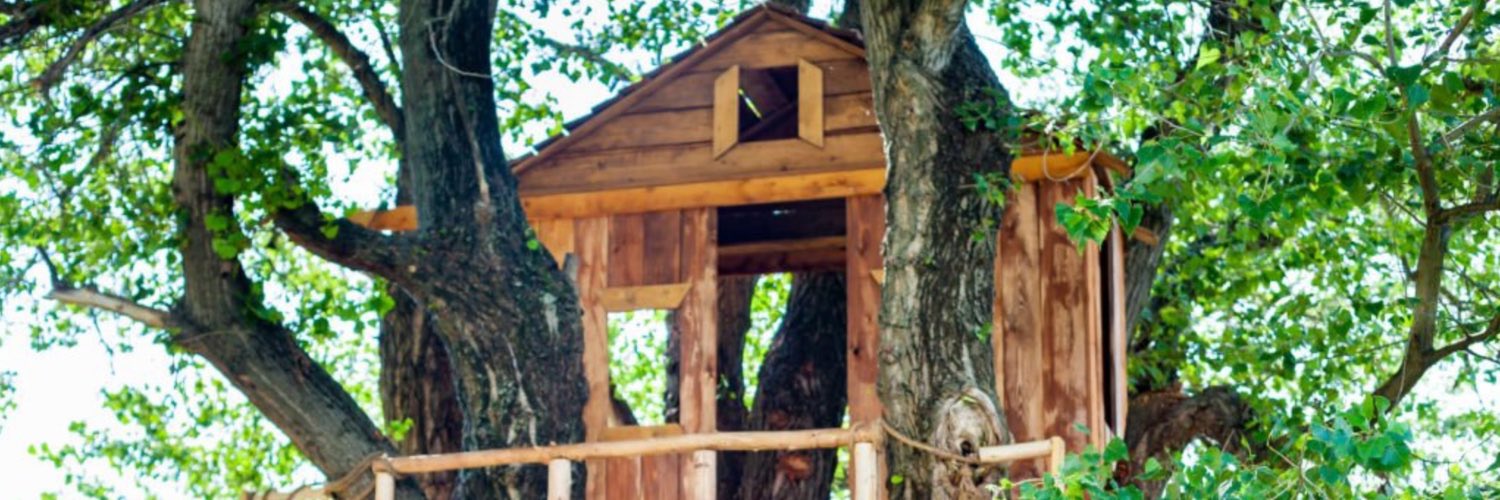
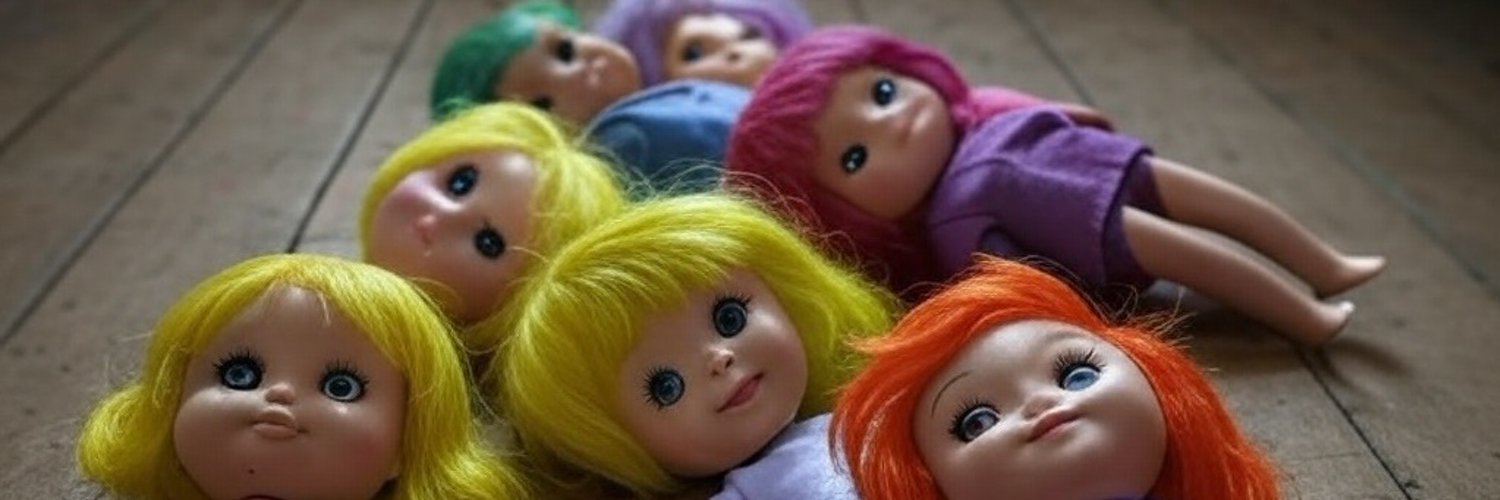
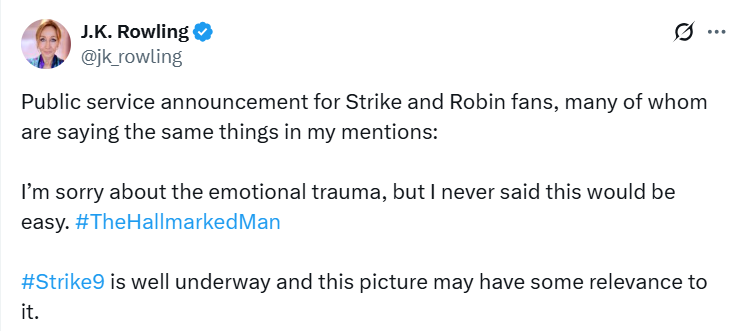
 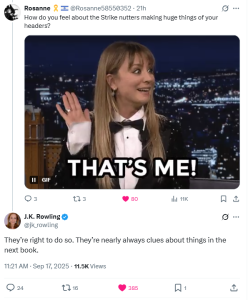 Although most fans are still digesting the wonderfully complex plot of The Hallmarked Man, J. K. Rowling has recently reiterated that her headers are usually clues to future books, it is probably a good time to remind ourselves of the headers most likely to refer to Strike 9. With The Hallmarked Man carrying themes of pregnancy, childbirth and babies, the images of a tree-house and scattered dolls, might mean a childhood theme for the next in the series.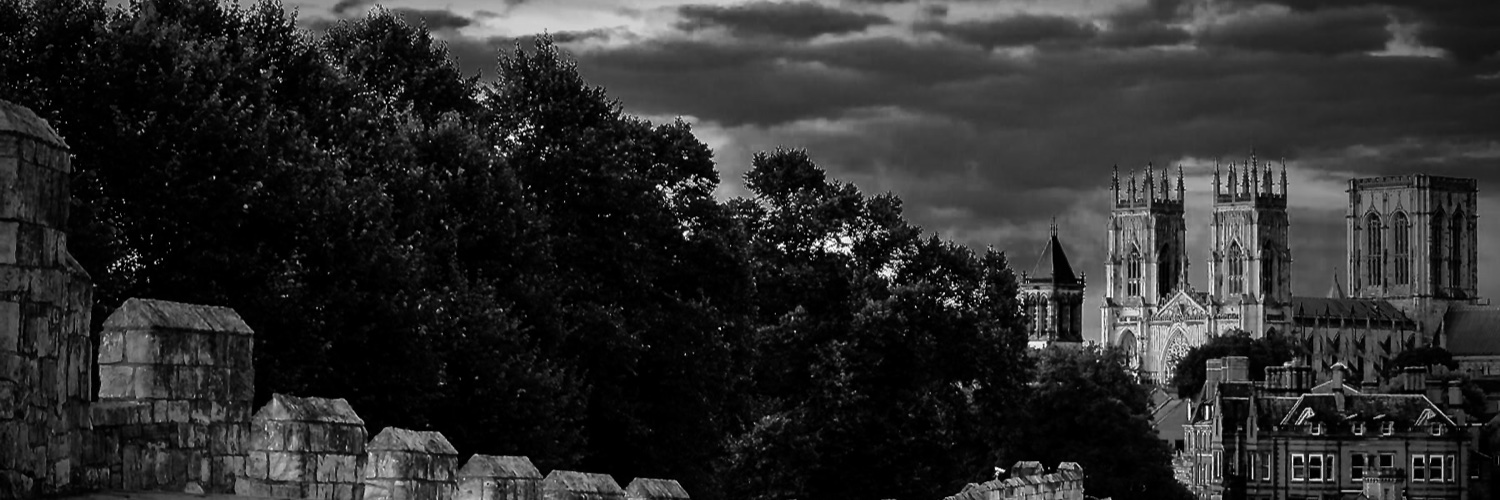


 A thirteen chapter preview is available for the lastest Robert Galbraith novel, The Hallmarked Man. This is a copy of the North American edition from Mulholland and the preview is available on the French website Decitre.fr, and is likely to be an error, so for the curious, check it out soon: