 In the last month, three readers have left comments on two HogwartsProfessor threads in which notes they accuse Rowling of being a Satanist.
‘YouveBeenDUped’ wrote about Rowling’s Solve et Coagula tattoo that “The words on her wrist are the same words on the baphomet of the Church of Satan….YUP”.
Clayton MacDonald said much the same thing after I wrote about the meaning of Solve et Coagula. He said, “You realize she’s paying homage to the baphomet. It’s the same tattoo the baphomet has written on it’s arms. The baphomet is the devil that satanists worship. Fact check me and tell me I’m wrong.”
Michael Todd and Erin Barr echoed this after the same post albeit with an ad hominem zinger: “She’s a satanist, don’t believe me? Check out what’s tattooed on the baphtomet (sic), the satanist goat god. But you will still follow her, because you don’t believe.”
What are they going on about? What is a baphomet? What does it have to do with Rowling’s tattoo and with Satanism? [Read more…]

 One those he continues to inspire, of course, is J.K. Rowling/Robert Galbraith. She has made Catullus her new hero’s favourite poet – in a way that marks both
  He looked unsmilingly upon Fancourt’s astonishment. The writer rallied quickly.
 On the
  Firstly Chiswell quotes Catullus 16 (apparently with homophobic intent) at Aamir Mallik: ‘Catullus more up your street, I expect. He produced some fine poetry about men of your habits.
  Rowling kept faith with that ‘Odi et amo’ tweet, too, in the sense that Catullus is even more important for the plot in
  Catullus – even, perhaps the startlingly adult Catullus 16 – also marks a subtle cross-over between the Strike and Wizarding Worlds. It is difficult not to notice post-
 Catullus 16, which is only quoted in
  A friend in the UK sent me fotos of this Sunday Mail article this morning: ‘
 Why should you, a Serious Reader of J. K. Rowling, care about Murray’s article, his tour, or his book? Because it represents the second and probably the more important tsunami ripple in the reactions to the Twitter rock (grenade?) Rowling threw into the global social media pond on 19 December.
  First, I am reading a print translation from Spain, while the audio version appears to come from the Americas, which probably accounts for some of the vocabulary differences: the use of medias versus calcitines for socks, for example. Most notably, the print version distinguishes between the familiar (vosotros) and formal (ustedes) plural you’s, as is preferred in Spain, whereas the audio version uses ustedes for both, as is common in Latin America. I had already mentioned that audio uses buho for owl, and the print lechuza, but interestingly, Hedwig is called una lechuza in both versions. This seems to be correct, since Hedwig, as a snowy owl, lacks ear tufts.
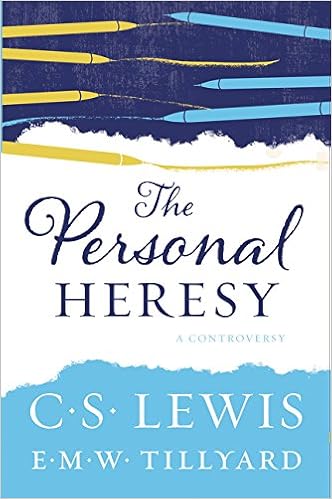 grading, preaching the virtues of the Oxford comma, and catching incompetent plagiarizers. Instead, I find myself having to do something rather odd, defend J.K. Rowling, but not against the usual antagonists: misguided Puritans, well-meaning but overprotective parents, and the sad horde of people whose imaginations were apparently damaged or removed in some sort of unfortunate childhood accident. Now, I’m defending her against the “fans” who are presently foaming at the mouth over a tweet she refuses to recant despite their most petulant whines and threats. The controversy and the subsequent venom of some members of the once-loyal fandom likely come as no surprise to the savvy Rowling, whose own work predicts just this sort of thing, but it is also reflective of a phenomenon rampant in a number of fandoms these days, a phenomenon C.S. Lewis foresaw with his brilliant examination of what he called “the Personal Heresy.” Join me after the jump for some thoughts on this phenomenon as it is playing out in Potterdom.(If you’ve been under a rock, catch up
Recent Conversation