Alchemy as a Transformative Art; Rowling’s Asides about Draco Malfoy

I recently completed a draft chapter of a new book about Rowling’s ‘Shed’ artistry, the piece about her use of literary alchemy, the story version of metallurgical alchemy. This subtle but powerful adaptation and deployment of hermetic symbols, colors, and sequences is a parallel and complementary backdrop to the psychomachia or soul-transformation allegories of Rowling’s best works — and the key word there is “transformation.”

The key hurdle for readers trying to grasp this occult narrative tradition in English literature, from Chaucer and Shakespeare to Yeats and Joyce, Lewis, Williams, and Tolkien, is getting over their received opinion that metallurgical alchemy was the science of Medieval charlatans who pursued get-rich-quick schemes to make lead into gold and an “elixir of life” for immortality. That doesn’t translate to anything that makes sense in terms of story; “literary alchemy” if thought of as “story chemistry” as the modern laboratory science taught in secondary schools everywhere is a head-scratching non-starter. English and chemistry classes today have no common ground.

Traditional, which is to say ‘theocentric,’ alchemy, however, was primarily about the soul of the alchemical adept or seeker, a natural science working to the same end as the revealed spiritual path in which the alchemist lived (there were Muslim, Chinese, Jewish, as well as Christian alchemies). It was, in brief, one of the sacred sciences within the mosaic of said traditions arts and sciences, all of which pointed to the same end, namely, purification and transformation of the soul in hope of divinization in this life or after death.

Perennialists Titus Burckhardt and Seyyed Nasr, both of whom wrote about metallurgical alchemy, put great emphasis on this key point:

Alchemy may be called the art of the transmutations of the soul. In saying this I am not seeking to deny that alchemists also knew and practiced metallurgical procedures such as the purification and alloying of metals; their real work, however, for which all these procedures were merely the outward supports or ‘operational’ symbols, was the transmutation of the soul. The testimony of the alchemists on this point is unanimous. (Burckhardt 1972, 23)

Alchemy was certainly a way of enobling matter, hence its relation to sacred art. But this also means that alchemy is not just a prelude to chemistry, that it is a science of the soul in its relation to the cosmos and making use of external transformations for the sake of that inner transformation which is the ultimate goal of all the traditional sciences. (Nasr 1993, 107)

This is the shared goal of traditional sacred arts, most notably for our discussion of Rowling’s literary alchemy, in written story and staged drama. Through imaginative identification with the story hero or heroine on page or stage, the reader or audience member passes through the transformative and cathartic cycle of the alchemical work, break-down nigredo, purifying albedo, and restorative and illuminating rubedo. Just as the ‘hard darkness’ of lead becomes the ‘solid light’ of gold,’ so the metallurgical alchemist and sympathetic reader feels his soul enlightened by the logos light of the world that is at the heart of the solve et coagula process, “dissolve and recongeal,” shared by the story and laboratory traditions.

Rowling has never been asked about alchemy (!), though she has volunteered quite a bit about the importance of it to Harry Potter, claiming even that it sets the “magical parameters” of that series. Robert Terry, a long time friend of this weblog, pointed out to me recently, though, that, in her Pottermore piece about Draco Malfoy, she points directly to the key piece about metallurgical and hence literary alchemy, that it is not about manipulation of materials but the transformation of the soul for the better.

The Draco page at Pottermore is a delightful capsule review of Draco’s experience before, during, and after his years as a classmate at Hogwarts with Harry Potter, his nemesis. I enjoyed the slightly different but clarifying focus of seeing Draco’s life qua Malfoy, if there is very little new information about him in the story. The piece ends with an ‘Author’s Note,’ which suggests that the much longer summary of Draco’s life was written by Pottermore staff, perhaps from Rowling’s notes. Its psychological points about Draco’s remarkable Occlumency skills versus Harry’s inability to close his mind are invaluable, I think, for grasping Rowling’s thoughts about these two characters, the archetypal Gryffindor and Slytherine fire-and-water pair.

Robert Terry, though, wrote to me about what Rowling shared in her closing paragraphs, her ‘Author’s Note,’ for this piece, namely, new information about Draco Malfoy as a man in the years after his education at Hogwarts:

I imagine that Draco grew up to lead a modified version of his father’s existence; independently wealthy, without any need to work, Draco inhabits Malfoy Manor with his wife and son. I see in his hobbies further confirmation of his dual nature. The collection of Dark artefacts harks back to family history, even though he keeps them in glass cases and does not use them. However, his strange interest in alchemical manuscripts, from which he never attempts to make a Philosopher’s Stone, hints at a wish for something other than wealth, perhaps even the wish to be a better man. I have high hopes that he will raise Scorpius to be a much kinder and more tolerant Malfoy than he was in his own youth.

Draco had many surnames before I settled on ‘Malfoy’. At various times in the earliest drafts he is Smart, Spinks or Spungen. His Christian name comes from a constellation – the dragon – and yet his wand core is of unicorn.

This was symbolic. There is, after all – and at the risk of re-kindling unhealthy fantasies – some unextinguished good at the heart of Draco.

Three quick notes about that:

(1) The pointed aside, “perhaps even the wish to be a better man,” in opposition to “a wish for wealth” that Malfoy does not have, reveals Rowling’s understanding that alchemy is about the transformation of the alchemist’s soul for the “better.”

(2) Her discussion in these concluding paragraphs and the Pottermore review as a whole opens up the discussion of Draco’s journey also being alchemical, in parallel to Harry’s albeit from the opposite ends of the Wizarding World hierarchy of status and values. When she writes about Half Blood Prince Draco, “The ideas that Draco had about himself, and his place in the world, were disintegrating,” the nigredo quality of that year for him is in plain sight. His year apart in Deathly Hallows, even given his misplaced efforts in the Battle of Hogwarts, have albedo elements as well; his refusal to identify Harry at Malfoy Manor reflects his incipient chrysalis. Rowling’s author’s note about his adult study of alchemy, theoretical rather than metallurgical, I think is her saying that he recongealed after the Fiend Fyre nightmare of Hallows into a much better man.

(3) Rowling really doesn’t want the reader to neglect the “symbolic” nature of Draco’s life, hence her bald statement “This was symbolic” in reference to the unicorn hair core of his wand. As explained in How Harry Cast His Spell, the three wand cores favored by Ollivander are each symbols of Christ, the unicorn being the most well known of the three in English letters via the Medieval tapestry tradition. Magic ‘works’ in Rowling’s Wizarding World for the most part because of the interaction of the magical person’s spoken words, specific spells in an arcane language rather than common speech, and the Logos or Word core of a wand. Rowling in writing about “the unextinguished good at the heart of Draco,” by using the word “heart,” the spiritual center or noetic locus of the human person in most of the revealed traditions, in the context of his wand core may be making a larger point about the universality of good in each person however twisted their upbringing. The Light of the world, she might be saying, comes into the world within every man (cf. John 1:9), even the despicable Malfoy heir.

My thanks to Robert Terry for sharing this Pottermore article and its almost explicit statement by Rowling that she understands alchemy as a soul transformative art. The work speaks to that understanding but it is always a help for those who struggle with that idea to have the author’s testimony alongside the textual evidence.

Rowling Impersonator, Doppelganger — and the Mysterious Michael at Exeter?

This is a grab-bag post with only the weakest of a connecting thread, namely, all three pieces have something to do with J. K. Rowling.

The first is the evidence Andy Ngo uncovered in April 2023 that radical leftist Talia Lavin had decided to impersonate J. K. Rowling on the Twitter social media platform in order to put “trans-phobic” words in the author’s mouth. If you check out the Lavin wikipedia page, you’ll see this wasn’t her first offense with respect to irresponsible behavior online.

The second is a Ukrainian woman living in the Donbass region who appears to be Rowling’s body-double or doppelganger. As you can see from the picture, she’s a dead ringer for The Presence, say, in 2005, and, at 5’2,” not far off in height, even allowing that it is a much younger Rowling that she resembles. Life in Ukraine, especially in the Donbass, is unimaginably difficult today because of the proxy war being fought between the United States and the Russian Federation there; perhaps Rowling, Inc., could find a job for ‘Oksana, Age 43‘ as a Rowling stand-in for engagements she is obliged to show her face and do little else? I think she belongs on these lists of ‘Nine Regular People Who Look Like Celebrities‘ or ‘Twenty-Two Celebrity Doppelgangers.’

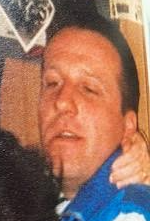
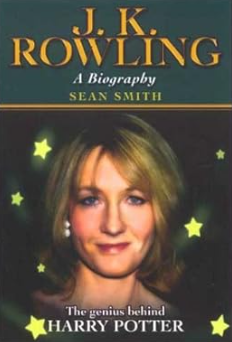
And, third and last, I searched and searched online for digital versions of the photographs of Rowling as a college student at the University of Exeter that are in Sean Smith’s J. K. Rowling: A Biography. I had no luck with that and, sadly, the book has no photo credits or exact dates so the pictures cannot be searched in that fashion. This is a real shame, because two of the pictures are of Rowling out on the town with three friends, two young women and one man. These are the only pictures we have of Rowling at UExeter outside of graduation — and they feature a guy, perhaps even the mysterious boyfriend?

I’m fairly confident that this man is either the “Michael” boyfriend of seven years, the break-up with whom after she lived with him in Manchester 1990-1991, inspired her decision to leave the UK for Portugal, or, much more likely, that he knows the real “Michael’s” surname. He looks like an accountant, rugby player, and, alas, not especially bright, which is to say, he could be the inspiration for Matt Cunliffe.  To be fair, of course, who looks their best in candid pictures taken in a bar, frat, or club?

Regardless, if you’ve seen this man or recognize him, please write to me at john at HogwartsProfessor dot com. I have tried for matches with him at TinEye.com (zero matches) and SocialCatfish.com (twenty-seven matches for $6.87 I don’t have); why not unleash the power of our readership to find the man? Happy Surfing!

‘All Along the Watchtower’ Comment by Rowling Suggests Her Real Reason for Going to Portugal in 1991

I think literary history and personal experience both tell us that everyone has a critical juncture in their lives, call it a nigredo if you want, perhaps ‘chrysalis’ is better,  in which everything falls apart and a new person emerges, one shaped by that crisis or series of calamities. For writers, Dickens is the prototypical example; each critical biography of the greatest English novelist I own — and I have a shelf — focuses on his time as a young man when he worked in a boot black factory while his father and family were in debtors prison. The wickipedia summary of that experience:

To pay for his board and to help his family, Dickens was forced to leave school and work ten-hour days at Warren’s Blacking Warehouse, on Hungerford Stairs, near the present Charing Cross railway station, where he earned six shillings a week pasting labels on pots of boot blacking. The strenuous and often harsh working conditions made a lasting impression on Dickens and later influenced his fiction and essays, becoming the foundation of his interest in the reform of socio-economic and labour conditions, the rigours of which he believed were unfairly borne by the poor. He later wrote that he wondered “how I could have been so easily cast away at such an age”.

I counted up in Harry Potter’s Bookshelf how many of Dickens’ novels featured suffering children. The final tally?

15 novels, 16 leading role characters without surviving parents or parents known to them, 2 novels feature title characters with only one parent, and only Dickens’ first book, an ad hoc collection of stories, does not feature an orphan or a neglected and estranged child.

If there was a creature in Dickens’ Lake of inspiration, it came to life in Warren’s Blacking Warehouse. I don’t think he was unusual in this, if the severity of his experience was remarkable; similar cases could be made for Dostoevsky, Nabokov, Tolkien, and C. S. Lewis among artists, and, lacking such dramatic events, what Freud called the “family romance” of every child is as formative (that is always ‘there’ in everyone’s psyche).

Our task here at Hogwarts Professor is to begin the ‘Fourth Generation’ of Rowling Studies, the one in which we shift from Shed focused literary interpretation exclusive of Lake concerns to one that includes Rowling formative experiences. Which means identifying as much as possible both her “family romance” and the life-and-mind pivotal moments that inform as inspiration her imaginative work.

The death of Rowling’s mother Anne in late December 1990 is almost without exception (and rightly) referred to in the very few biographies of the writer available today as a defining moment in her life as a writer. She described it as a “depth charge” that blew up her life, the nadir of her “year of misery,” and the primary impetus of her November 1991 departure from the UK to teach English in Portugal. That led, of course, to her meeting, marrying, having a child with, and divorcing Jorge Arantes, another formative relationship that is the foundation of her depression and latent PTSD.

Last week in my post about the latest internet meme meant to defame J. K. Rowling, ‘It’s the Mold!’ Rowling Twixter Cameo Shots Launch Bizarro Theories, I used a picture taken in September 2020 of The Presence in her home library. I used its relatively clear image of the back wall to explain that the “mold” supposedly growing floor to ceiling in her library is almost certainly very tasteful wallpaper with a Japanese block print image on it.

That picture came from a 2020 interview on the Version’s ‘Tracks of My Years” show; celebrities on this popular program are asked to share “tracks” in the “song” sense of that word and explain the meaning it has for them. If you follow that link to read Rowling’s answers and song selections, you find what I described in that post as a potential “key to unlocking the central mystery of Rowling’s life.” Find out what I’m guessing that is after the jump. [Read more…]

Oliver Anthony: Is He a Member of Generation Hex?

Rowling was asked on her 2007 Open Book Tour of North America if she had any advice for her readers, young and old. She responded promptly and in the affirmative: “Don’t trust the press or the government.”

The years since have only confirmed the wisdom of that pointed advice, especially during the Covid, Trans, and Ukraine hysterias.

If postmodernity as a historical period per the angry Algerians of literary criticism is characterized by its collective “incredulity toward the metanarrative,” that is as true for those who grew up reading Harry Potter. This is true, I think, even though almost all of that fandom’s leadership were sucked into the Orwellian nightmares from the political left of the last fifteen years.

I thought of the skepticism about everything we are told by the media and government that is prevalent and growing today — “How many times can we be duped into changing our status flags on Facebook before we catch on?” seems a commonplace feeling — when I read that Anthony Oliver’s ‘Rich Men North of Richmond’ marked its first anniversary in the public square.

Here is that unforgettable song of raging against the machine as sung by its remarkable writer:

And here are Oliver’s reflections on the year that has passed by, his gratitude to his supporters, his determination not to be pigeon-holed by media or political partisans, and his commitment to working to help others have a life with roots in the land, not their ‘Smart’ phones.

No, I have no idea if Oliver Anthony read Harry Potter as a boy. He seems to be a cross between Wendell Berry, the free-wheelin’ Bob Dylan, and abolitionist John Brown (it’s the beard).

I wouldn’t be surprised, though, if he did read it all. There’s a magical touch and Gryffindor quality to him.

What if her were a character in the Saga? Where would he be sorted? Whom does he resemble?

The Sorting Hat might put him in Hufflepuff to be guided by Professor Sprout but he shows shades of Ravenclaw insight; I think, though, if you gave the young Albus Dumbledore some time in the mountains with a pick and a banjo, that he might have been singing songs like ‘Rich Men North of Richmond.’

Tomorrow, ‘Rowling, Jimi Hendrix, and the Defining Decision of Her Life.’ Stay tuned!

‘It’s the Mold!’ Rowling Twixter Cameo Shots Launch Bizarro Theories

I have posted here through the years an irregular feature called ‘Shared Text.’ Those posts were inevitably inspired by someone, somewhere — anywhere, everywhere — using a reference to Harry Potter to make a point. It could be to Snape or Hermione, too often it is to Voldemort (everybody thinks the other guy is the Dark Lord’s minion), more often than not, it’s just a ‘Hogwarts’ call-out. My favorite, the ‘own-goal’ of the Covid unvaccinated, to which group I belong, deciding to promote that status by pushing #PureBloods on Twitter. If you want to scroll through all those Shared Text posts for a taste of the variety, click here.

I am fairly frequently reminded not only of the Harry Potter books being the ‘Shared Text’ of our times but just the enormity of Rowling’s celebrity in the place where I work to pay my bills and student loans. It’s a grocery store and just small enough that almost everyone there knows me and about my ‘Dean of Harry Potter scholars’ Walter Mitty existence. At least once a month, sometimes once a week, an acquaintance there will walk up to me with their ‘smart’ phone saying, “John, have you seen this latest bit about Rowling?” And hold up their phone so I can read the story.

Last Sunday it was my beloved tattooed man in the Produce department. “I suppose you’ve heard that Rowling has black mold in her house? And they’re saying that it’s taken over her mind?” I thought he was kidding, but he showed me the story. You can read here the whole sequence of events about the first tweets on the subject, how it grew into a meme, and the pictures from 2022 that showed the same “mold” growing on her walls.

The take-away? People who hate Rowling because of her resistance to what Elon Musk has called “Woke Mind Virus,” especially with respect to Gender Theory Extremists and ‘transgender’ over-reach into women’s safe spaces, are really on the look-out for avenues to insult and demean her. The first tweet on the subject from @mushycrouton reads:  “Sorry but is that black mould growing up the walls of her house? Is that why she’s the way she is?”

“The way she is” means, of course, “not onboard like all my followers are with everything LGNTQ+” and the mold reference becomes his explanation for her being so outlandishly wrong. The black mold, you see, has taken over mind… The internet ball rolled from there. You can read more about this at Rowling-despising sites here, here, and here. The time you spend reviewing that, though, cannot be reclaimed, alas.

The bizarre thing to me about the whole attack-meme charade was that it isn’t hard to see what this mold is.  Join me after the jump if you’re at all interested in that. [Read more…]