Full Cast Audio Harry Potter: Is It Worth a Listen? Three Potter Pundits Discuss

John Granger rarely listens to audio adaptations of books unless he’s on a long drive, though he admits they have played an important part in his life as a reader.

Nick Jeffery listens to audio books everyday and often for hours at a time; he credits the medium for his mid-life rebirth as a reader (re-reader!).

Zossima Granger, writer in residence at ProtagonistBook.com (Give the gift of an unforgettable story!) and host of Teller Talk interview series at Zossima’s Story Stack Substack page, cannot remember a time when Harry Potter and audio books were not an important part of his life. He like Nick listens to one book per week or more.
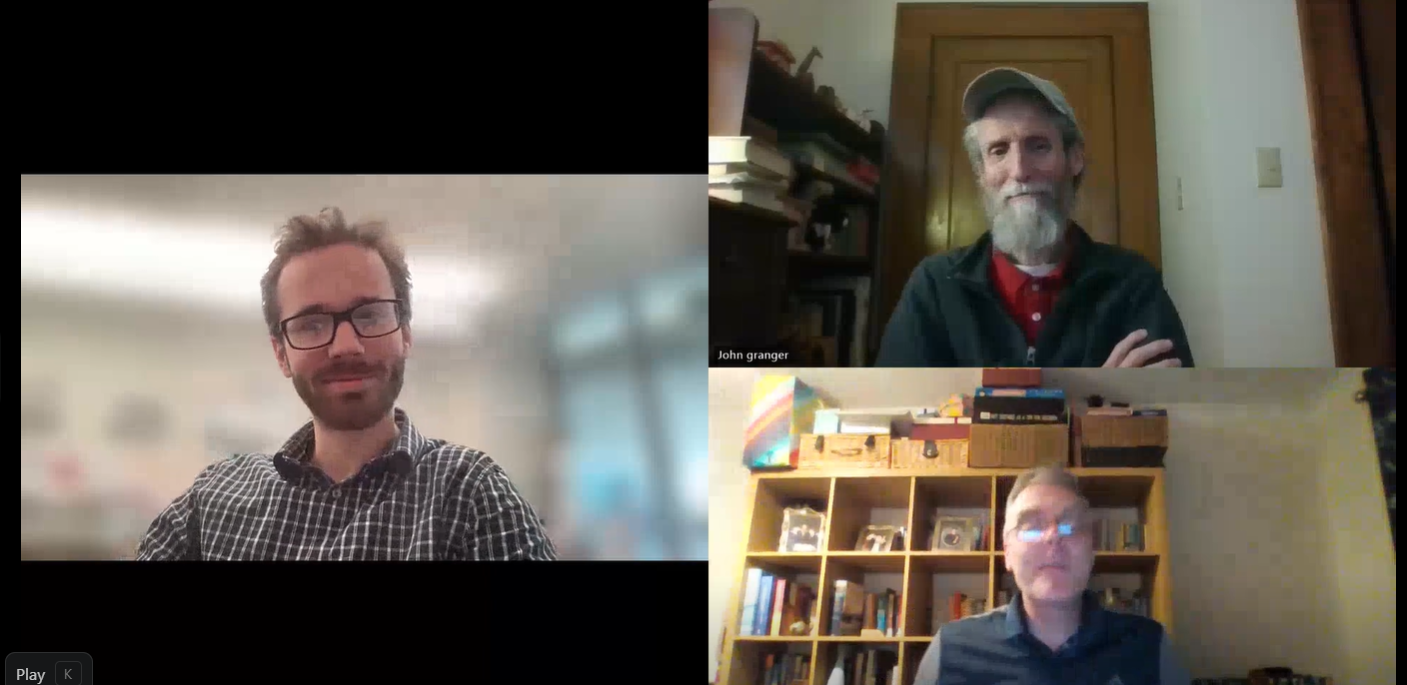
So — what do these Potter Pundits and Serious Strikers think of the new Audible ‘Full Cast Audio’ (FCA) unabridged dramatization of Harry Potter and the Sorcerer’s Stone, which in the UK and Commonwealth nations is Philosopher’s Stone?

They loved it! Listen to their in-depth discussion at the HogwartsProfessor Substack page.

No, the adaptation wasn’t perfect, and, yes, there are a few jarring miscues and disappointments. As they explain in their ten point discussion of their experience listening to the Audible production, however, there’s reason to be very excited about this audio version of the first Potter novel and the six promised FCA dramatizations.

Nick lays out the audio adaptation history of the Hogwarts Saga, to include, in addition to the background of the new FCA books, the Stephen Fry and Jim Dale legacies. And then he asks the questions below!

  1. What is your relationship with audio books? Are you a frequent listener?
  2. Were the Fry/Dale Potter adaptations an important part of your experience of the Hogwarts Saga?
  3. Did you listen to the ‘full cast audio’ adaptation of Christmas Pig? Other books?
  4. What were your expectations — fears and hopes — for the Sorcerer’s Stone full cast audio adaptation?
  5. What was the biggest surprise you experienced in your first listening?
  6. Which of the voice actors brought out a different dimension of the text than you expected?
  7. What is your favorite scene in Stone and was the full cast audio depiction of it a delight or a disappointment?
  8. Fry, Dale, or Full Cast: will you listen to all three versions in the future? Do you have a strong preference?
  9. Thumbs up or down: one to five stars, please, for the Audible production and your biggest grins and gripes.
  10. What changes do you hope the producers will make before they release the next six adaptations?

Please join in the conversation by sharing your answers to these questions in the comment boxes below. What is your relationship with books you listen to rather than read? What do think of the new FCA dramatization?

And, when you’ve made your contribution to this conversation and you’d like more conversation between Nick Jeffery and Zossima Granger for dessert, check out Teller Talk #4, ‘Harry Potter and the Skill of Reading’!

The JKR 60th Birthday Party Kanreki Celebration Index: Links and Blurb summaries of the 31 Lake and Shed Conversations of Rowling’s Life and Work in July 2025

Last month, Nick Jeffery and I logged a marathon of Kanreki ‘Lake and Shed’ posts at our Substack site in celebration of Rowling’s life and work at her 60th birthday. Nick has been re-posting links to that work here at the weblog and now I have assembled below an easy-to-access-and-reference single place for readers to find any part of this fun series. Enjoy!

Introduction to the Kanreki Project

On 31 July 2025, Joanne Murray, aka J. K. Rowling and Robert Galbraith, celebrated her 60th birthday. This specific celebration is considered a ‘second birth’ in Japan or Kanreki because it is the completion of the oriental astrological cycle. To mark JKR’s Kanreki, 還暦, Dr John Granger and Nick Jeffery, both Nipponophiles, read through Rowling’s more than twenty published works and reviewed them in light of the author’s writing process, her ‘Lake and Shed’ metaphor. The ‘Lake’ she said in 2019 and 2024 is the source of her inspiration and the ‘Shed’ is the alocal place of her intentional artistry, in which garage she transforms the biographical stuff provided by her subconscious mind into the archetypal stories that have made her the most important author of her age.

Join us after the jump for the complete compendium of the Harry Potter, Cormoran Strike, Fantastic Beast, ‘Stand Alone’ stories, and Golden Thread posts! [Read more…]

Mailbag: Bad Dads and Peter Gillespie

I received a pretty involved question this morning from long time reader and correspondent Wayne Stauffer, one of the original ‘HogPro All-Pros.’ While attempting to answer it, I was compelled to reconsider one of the leading suspects in any line-up of likely Leda Strike murderers, namely, Peter Gillespie. I’ve been relatively dismissive of this fandom theory — see Who Killed Leda Strike? Peter Gillespie for my thoughts way back in 2021 — but Wayne’s question and the latest iteration of the S&E podcast crew theory has me thinking I was wrong not to argue Gillespie is the most likely character to have killed Cormoran’s mom, one readers should think of immediately as the killer.

Here is Wayne’s question, one that isn’t about Leda or Peter per se but Rowling’s ‘Daddy Issues’ and how it plays out in her fiction:

I’m wondering what the Hogwarts Professoriate thinks about an aspect of JKR’s works so far.

More than once the topic of her “strained” relationship with her father has been mentioned, yet in her writings so far we don’t see much of her vicariously working through any lingering “daddy issues” in her fiction (that is, characters with those issues).

We have Luna and Xeno Lovegood, Ginny and Arthur Weasley, and a bit of Hermione and Mr. Granger in the Harry Potter books, but those are all positive relationships.

I’m not as knowledgeable in her Strike novels, though I haven’t seen much discussed on your website. Robin seems to have other issues, but not those.

Casual Vacancy characters have a variety of dysfunctions, but Ickabog and Christmas Pig seem to be free of these.

Since 4th gen Rowling Studies is digging into biographical and psychological influences, I’m wondering how much this Daughter/Father dynamic plays in the writing. 

My answer to Wayne was to send him two long posts I’d written, neither of which addressed this subject the way he framed it, but both of which laid out Rowling’s fictional depictions of her relationship with ‘Peter John Rowling,’ her father, via characters named “Peter” or “Simon” and those named “John” or “James.” In the first post, ‘Christmas Pig 1: Jack Jones, Peter, and John,’ you get the Rowling family history and its reflection in the Bad Dads of her work; in the second, ‘Exceptions to the Peter-John Rule: John Bristow, Dolores Umbridge, Matt Cunliffe,’ I answered objections to the theory, namely (!), those characters named ‘John’ who were jerks (or much worse).

It wasn’t a direct answer to Wayne’s question, but it did share in a fairly cohesive way my thinking about “how much this Daughter/Father dynamic plays in the writing” of Rowling-Galbraith. I’m hoping that Prof Stauffer will consider writing up his notes on the actual Daddy-Daughter relationships in all Rowling’s work, a step beyond anything I have done.

He hinted at such an expository exercise in his answer to my response, in which he wrote, “So, Rowling has her characters embody the bad dad qualities more than she has them working through issues?” I think that’s about right, but I haven’t done the necessary survey of the work. My initial reservation would be ‘Jack Jones’ in Christmas Pig whose name is in essence ‘John squared’ and can be assumed to be the equivalent of ‘Joanne;’ the whole mythic Dante-esque alchemical transfiguration of this character in the Land of the Lost is his “working through” his Bad Dad “issues.” The money paragraph of the Christmas Pig post above:

Rowling dedicates the book to David and has explained that the story toys, the cuddly pig favorite and its replacement, reflect two such cuddly pigs that her son adored. Jack Jones, however, is a name, front and back, that is a form of the name John; he is Joanne Rowling more than David Murray, her name also derived from Johannes, the Greek word for John (Rowling has given her daughter Mackenzie the middle name Jean, the more obvious feminine form of John). To put all my allegorical and sublime symbolism cards on the table at the start, what Jack has lost in the story is his father, what Holly fears losing to her step-brother is her father, the Pig is the exteriorized ‘heart’ or love he has as token or “transitional object” of maternal, unconditional love, and the story of the Loser is the sublimated agony of separation from Dad experienced as a child-hero must in the world of things and language. The Christmas Pig, though, in addition to this psychological allegory or dream-journey is an anagogical tale of seeking communion with the Father in Heaven through the light in one’s heart, the Johannine theology of logos-love that permeates Rowling’s work.

[Read more…]

Warner Bros Adapting ‘Christmas Pig:’ Will It Become Rowling’s Best Loved Book? A Second ‘Christmas Carol’?

Picture from The Rowling Library article, ‘Warner Bros. will produce animated film adaptation for The Christmas Pig,’ 9 December 2024

Three quick thoughts about The Christmas Pig being made into an animated movie, I assume for release at Christmas time this year or next:

(1) It’s Happening. See The Rowling Library article linked above from last December that has the details that are known and rumored about this project. Probably the most important note in it was “Tom Edge, who has previously adapted the Cormoran Strike novels for the BBC, will be responsible for the screenplay adaptation.” Edge clearly has a working relationship with Rowling, so, whatever your thoughts about the teevee adaptations of the Strike-Ellacott novels, we can at least be sure that the animated movie won’t be unrecognizable from the remarkable book.

(2) This Is A Big Deal. We’ve written a lot about The Christmas Pig here at Hogwarts Professor; see ‘Hogwarts Professor Christmas Pig Posts‘ for a one-stop collection of links to articles by Evan Willis, Bea Groves, Elizabeth Baird-Hardy, Nick Jeffery, and myself, work that includes a ‘Rowling Studies’ podcast. If you listen to that conversation, you’ll hear Nick and me argue from contrary starting points — he’s in the Lake, I am in the Shed, as usual — that Christmas Pig is arguably Rowling’s finest work.

It certainly is the shortest show-piece of every signature Rowling point of artistry to be found between two covers: alchemy, ring composition, Christian symbolism, Divine Mother, revelation of the “Real,” you know it, Christmas Pig has got it. I suspect it will be read in future generations as the “representative” work that English students must read for the ‘Age of Rowling’ or ‘Early 21st Century Postmodern Writers’ the way that A Tale of Two Cities is for Dickens, though it is perhaps the least Dickensian of his usually much longer stories.

This animated production is a big deal because Christmas Pig has largely fallen off the radar of even the most serious among Rowling readers. A cartoon version, if it is well done, will bring millions of new readers to the story — and will do so every year there is a Christmas as the film moves to streaming services, television, DVD, airplanes, etc. A Warner Bros/Discovery production of Christmas Pig has the potential, I think, to make Rowling’s shortest stand-alone book the one future generations will think of when they hear her name. Yes, even more than Harry Potter.

(3) Rowling’s Intentional Legacy? Imagine for a moment that Rowling is as savvy, as well read, and as, well, Machiavellian as her brilliant character, Hermione Granger. She’s well aware of English literary history, a big fan of Charles Dickens, and well aware of how readers understand great writers of the past (whence her guiding critical biographers with her repeated ‘Lake and Shed’ comments about how she writes). Is it possible that she wrote Christmas Pig in an attempt not only to one up Dickens’ life-changing Christmas Carol, a story that saved his career at a near nadir of his life, but also to mimic what Carol has meant for Dickens’ legacy?

I know that discussing an author’s intention without his or her expressed intention being known is to forever chase one own’s tail (see Michael Ward’s brilliant Planet Narnia that has this problem as its most notable fault). I’m aware, too, that Rowling is disdainful, at least on Twixter, of those who think about how they will be remembered after they are dead.

I bring up this possibility nonetheless because I can see Rowling’s Christmas Pig becoming her Christmas Carol, even Rudolph the Red-Nosed Reindeer.

The best-selling English novel of all time? Tale of Two Cities. As noted above, though not really representative as a Dickens novel, as the shortest of his books, it is read by almost every secondary school student in English speaking countries or was read by students for almost two centuries. But what is the most well-known and loved piece by Charles Dickens? His Christmas Carol.

The most watched television show of all time, too, is a Christmas special, the stop-motion animated version of Rudolph the Red Nosed Reindeer. According to Rick GoldSchmidt, author of Rudolph the Red Nosed Reindeer: The Making of the Rankin/Bass Holiday Classic, “Premiering on NBC December 6th, 1964, Rudolph has become the longest running, highest rated television special in the history of the medium.” See Ronald Lankford’s Rudolph: An American Hero for a much more comprehensive history of the show and my Harry Potter’s Bookshelf for a postmodern reading of the show and its relevance to the Hogwarts Saga.

I think it’s possible that Rowling poured herself into a Christmas tale the way she did with Christmas Pig to create a 21st Century Rudolph and Christmas Carol. Not probable, but possible! And, as noted, whether this was her plan or not, I’m sure it is the hope of Warner Bros/Discovery that this property turns into a perennial favorite, a touchstone of holiday viewing everywhere for years to come.

For my Perennialist notes about Christmas Pig, taken in large part from my PhD thesis in which Pig, Troubled Blood, and Deathly Hallows were the focus of my critical efforts, all the links are available after the jump. Enjoy!

[Read more…]

Pregnancy Traps in Every Rowling Story: The Golden Thread of Coercive Love

Dr. John Granger and Nick Jeffery explore the theme of pregnancy traps and coercive love, as a golden thread running through all the published works of J. K. Rowling. The new episode can be downloaded over on the Hogwarts Professor Substack.

After a long delay, Rowling studies returns with a discussion of a theme that is found throughout Rowling’s work. The Hogwarts Professor posts that John and Nick reference can be found here:

Rowling Pregnancy Traps: Merope Gaunt

Rowling Pregnancy Traps: Casual Vacancy’s Krystal Weedon, Kay Bawden

Rowling’s Pregnancy Traps: Bellatrix Lestrange and the Cursed Child Delphini

Rowling’s Pregnancy Traps: Leda Strike

Rowling’s Pregnancy Traps: Four Strikes

Rowling’s Pregnancy Traps: Last Strikes

Rowling’s Pregnancy Traps: Fantastic Beasts, The Ickabog, The Christmas Pig